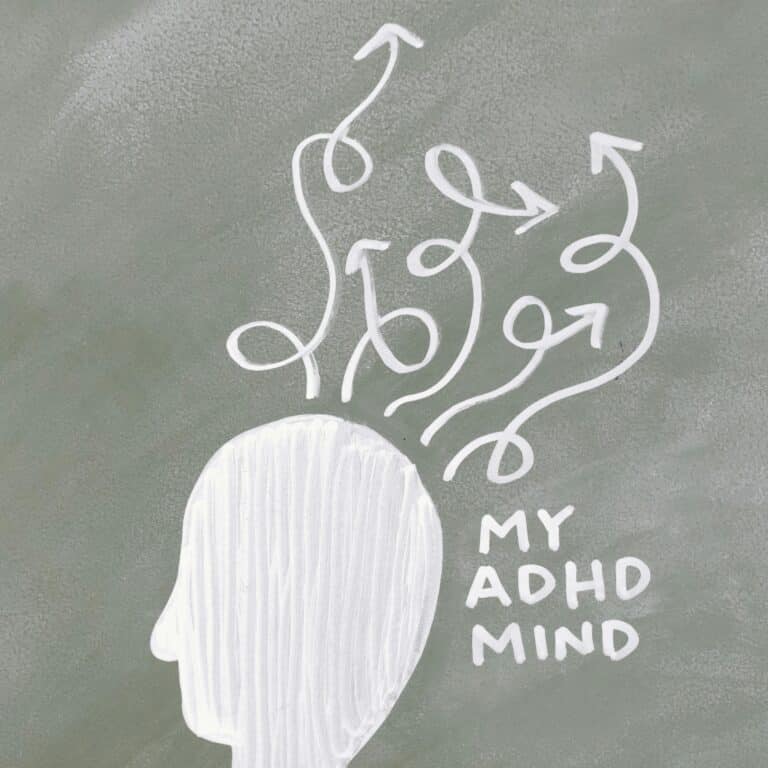
Explaining ADHD: a chalkboard drawing of a head with squiggly arrows going out if it, and text that says "My ADHD mind".

Explaining ADHD: What I Want My Dad to Know About ADHD

A while ago, I wrote a blog post titled What I Want My Mum to Know About Autism, and it ended up being one of my most-read articles. In it, I tried to give voice to my struggles and my needs, tried to explain the differences. From the beginning, I intended to do something similar for ADHD. I get ADHD from my mother’s side, and she doesn’t understand my autistic side, while the autism I inherited from my dad’s side, and he needs a bit of help with understanding and explaining ADHD. This blog post is not only for my parents, but for every reader who needs the words to explain themselves to their loved ones. You can borrow this blog post to help your family and friends understand and explain ADHD a bit better. So, here goes:

ADHD meal planning: a smiling Black woman eating cereal and strawberries from a bowl

ADHD Meal Planning Made Easier: Gentle, Realistic Strategies for Your AuDHD Brain

Eating sounds so simple, right? But for us with AuDHD, it can be anything but. ADHD food struggles are real, and they’re more common than you may think. Shopping ingredients, planning meals, deciding what to cook, remembering to eat… This all may seem overwhelming, and you may find it difficult.

It is pretty common to feel guilt or shame around food when you have an AuDHD brain. Maybe you’ve skipped meals without noticing, lived off snacks for days, or cycled between forgetting to eat and bingeing whatever’s available. Maybe you eat too little or too much. For brains wired for unpredictability, consistent nourishment can feel out of reach. It’s not failure; it’s just part of your wiring.

Neurodivergent sleep: A young asian woman in pyjamas, sitting with an eye mask and pilow on the top of her head. SHe looks frustrated.

Neurodivergent Sleep Struggles: Autistic and ADHD Sleep Lifehacks

If you’ve ever found yourself staring at the ceiling at 3 a.m., completely exhausted but inexplicably wide awake, you’re not alone—especially if you’re neurodivergent. Sleep problems are incredibly common in neurodivergent communities, with studies showing that up to 80% of autistic people and around 75% of those with ADHD struggle with falling or staying asleep. And if you happen to be both autistic and have ADHD (hi, hello, solidarity!), then you might know all too well what I like to call the “neurodivergent sleep disaster cocktail”—a potent mix of racing thoughts, sensory issues, hyperfocus, and a body that refuses to wind down when it’s supposed to.

ADHD and money: a a smiling woman with a fan of dollar bolls spread in front of her face

Autism, ADHD and Money: How to Easily Manage Your Finances With AuDHD

ADHD and money? That is a recipe for disaster. ADHD means impulsive financial decisions, rash judgments, and ADHD tax. (Oh, the ADHD tax!) You may feel in over your head when it comes to finances. It’s chaos! There is always too much of the month left at the end of the money! Luckily, you can call on your autistic side to help.

(But first, to my American readers: Being from Europe, I don’t know the first thing about credit, sorry. No advice from me on this front. But I know a thing or two about budgeting, and that’s what we are going to talk about today.)

Now it’s time for your autistic side to shine. Spreadsheets! Planning!

A photo of a young woman with hands bound in chains, representing ADHD and addiction.

ADHD and Addiction—Exploring the Link

Addiction is an extremely difficult topic for me, and yet, so important to talk about.

People with ADHD are at much higher risk of addiction than the neurotypical population. 50% of adults with ADHD have a history of substance abuse at some point in their lives, compared to 25% of neurotypicals. A whopping half of adults with ADHD have struggled, struggle, or will struggle with substance abuse.

But one thing can help prevent this.

A photo of a woman drinking water from a glass.

ADHD, Autism, and Hydration Struggles: How to Make Yourself Drink Your Water

If you are neurodivergent, you may struggle with getting hydrated. Autistic people often have problems with drinking plain water, while people with ADHD can forget to drink enough. Whether you need tips to make drinking water more sensory-friendly, reminders to keep hydration on your radar, or creative alternatives to traditional water, this blog post is here to help. You’ll find here practical strategies designed with neurodivergent needs in mind, from flavor hacks to clever routines. Ready to make staying hydrated easier? Let’s dive in!

A young woman balancing on a beam.

Science Says Balancing Exercises Can Help Your ADHD Symptoms

I have read a very interesting chapter in the book ADHD 2.0 that suggests that balancing exercises may improve the symptoms of ADHD. Why? Apparently, both physical balance and executive functioning are controlled by a part of the brain called the cerebellum. The cerebellum is a small part of the brain – it takes only 10% of its volume, but it contains a staggering 75% of all neurons of the brain. It has been long known that together with the vestibular system, it controls your balance.

A woman dressed in red, jumping with joy in the middle of the street. She has a big, cheerful smile. The photo has very ADHD energy.

Caffeine Not Working Because of ADHD: A Realistic Guide to Boosting Energy

For most people with ADHD, caffeine doesn’t work as it would for neurotypical people. Instead of a boost of energy, it makes them calm and sleepy. I’m one of those odd ADHDers for whom caffeine works normally. I have asked around and apparntly, it happens. But if you are not one of the fortunate, what to do to get an extra kick when you have stuff to finish? Here are some tips!

When you have time blindness, you lose sense of time and often arrive late. Pictured is an asian woman surrounded wit hands holding an alarm clock

What Is Time Blindness and How to Deal With It

You are running late. You are always running late and you don’t understand why. You woke up extra early, and yet you are late. Again. The stress and shame is eating at you. You desperately WANT to be on time, try to be on time, just to fail every time. People are angry at you. They think you are lazy and disrespectful. They don’t understand that you are angry at yourself too. That you are trying so hard. Everyone around you is able to show up on time, and you are not. Again and again, you try, you promise yourself you will do better, and you fail.