For most people, taking a shower is such a normal part of daily life that it hardly gets a second thought. But if you’re autistic, ADHD, or both (AuDHD), showering can feel like climbing a mountain. Maybe you put it off for days, maybe you dread it, or maybe you push through but feel completely drained afterward.
This isn’t about laziness or a lack of concern for hygiene. It’s about the very real sensory, executive function, and emotional challenges that come with being neurodivergent. The sound of rushing water, the feel of soap, the endless steps to remember… it can all add up to something overwhelming. And yet, because this struggle is rarely talked about, many of us end up feeling ashamed or “broken” for finding showering so hard.
In this post, I want to unpack why showering can be so difficult when you’re autistic and ADHD, and share some strategies that might make it a little easier, or at least less miserable. You deserve self-care that actually works for your brain and body.
Autism and showering – why it’s so difficult for us?
Maybe you dread the shower because it’s a sensory hell for you. Maybe you love being in the shower, but still, you can’t seem to make yourself start. Autism and ADHD can make showering difficult. In fact, both autism and showering struggles, and the challenges of ADHD and showering, are common experiences in the neurodivergent community.
For autistic people, showering is often a sensory problem. Feeling wet can be overwhelming. The varying pressure of the water on your body can also be challenging. The sound of running water can be too much. You might struggle with the feeling of wet hair and the slippery textures of soap and shampoo. Temperature changes can contribute to sensory overload, just as the sensation of changing clothes. Changes in head positioning during washing your hair can be dysregulating.
The ADHD shower – transitions and motivation struggles
When you have ADHD, you can have a problem with transitions. Transitioning from being dry to being wet and to being dry again can feel daunting. Moreover, showering can be perceived as a low-reward activity that you can’t seem to find motivation for. It can be difficult to interrupt a more rewarding activity just to go shower when your brain doesn’t give you the reward chemicals. An ADHD shower can also feel like a daunting, huge multi-step process.
AuDHD showering challenges
And when you are AuDHD? Your ADHD side makes it difficult to start showering, while your autistic side suffers when you are in the shower. This can create a cycle of avoidance. And it can create a lot of shame and guilt because you struggle with basic hygiene. Maybe you are forcing yourself to shower and suffering through the discomfort, which can contribute to burnout. Maybe you can’t make yourself do it, and it impacts your self-esteem.
My struggle with showering and the surprising solution
I started struggling with showering when my mental health got worse. I gradually showered less and less, and in the end, it stopped being a part of my daily routine at all. I washed the strategic bits and pieces twice a day, but my whole body in water? That wasn’t happening. What finally helped me, ironically, was a hospitalization (link). I was so overwhelmed by being around a lot of people, nonstop, that I started to shower twice a day, morning and evening. I needed it as a kind of mental reset. (And besides, it was the only moment of privacy at the crisis psychiatric ward.)
When I got home from the hospital, I needed to reinvent my morning routine, and I have consciously decided to keep showering as a part of it. Here is where my autism helps, because once I got used to the routine, I stuck to it.
The hospital gave me a jumpstart to begin, and then I was just keeping the momentum. But the good news is that you don’t have to go to such extreme lengths just to keep yourself clean. There are easier ways.
Practical showering strategies for AuDHD brains
1. Use a space heater
If you are sensitive to temperature changes, use a space heater for your bathroom so that you don’t feel cold after getting out of the shower. Use towel warmers. Make sure the water is a comfortable temperature, not too hot and not too cold. A handheld shower helps you control where the water is spraying on the body. You can try to find a showerhead with a gentler spray. Bathing instead of showering can also reduce the impact of temperature changes and changes in water pressure.
2. Sensory friendliness
Make showering more sensory-friendly for you. Use bath and shower bombs with your favorite scent, or use fragrance-free products if it’s all too much. Play music you like, or use earplugs if you have problems with the sound of running water. Adjust the lights in your bathroom to soft, warm lighting. Use an instantly absorbing body lotion after the shower to keep your skin from being dry and itchy. It doesn’t leave an oily film, so it’s more sensory-friendly.
3. Dopamine pairing
For a more enjoyable time and therefore more motivation to start, pair showering or bathing with a pleasurable activity like listening to podcasts, watching videos, or scrolling TikTok. Try setting up a challenge – for example, try to finish showering before a playlist ends.
4. Start simple
If the prospect of showering seems daunting because there are so many steps, start simple. Skip hair washing. Skip shaving. Keep it simple. Often, the most difficult thing is starting, so remove the barriers to it. You can gradually add more steps as you get used to showering regularly. Try showering every day at the same time and follow the same steps. This helps to provide you with the feeling of security and stability.
5. Habit stack
Build a routine by creating a habit stack. Predictability and structure help reduce the anxiety associated with a routine change. Write out the steps you need to take, or create a visual aid. Don’t forget to add a reward at the end. Keep all the shower items visible and easily accessible, for example, on a corner shelf, or use a clear wall-mounted dispenser. Set them out in the order of use. Setting up a timer or playing a playlist can help you be aware of the passing of time, which helps with the transitions.
6. Use hand mitts
If you have lower body awareness, you can use hand mitts to make it easier to feel where you are cleaning. If you have problems with balance, put a non-slip mat and grip stickers in your bathroom. You can also use a shower chair or stool.
7. Start smaller
If the idea of showering is still too much, you can start smaller: Experiment with baths, sponge baths, or rinsing off instead of a full shower. You can use dry shampoo or wipes instead of showering. Do whatever helps you to keep clean. Hygiene doesn’t need to be perfect; “good enough” is enough. And don’t forget to celebrate every small victory.
Showers on Your Terms
Showering might never feel effortless when you’re neurodivergent, but that doesn’t mean you’re failing. Whether it’s the sensory overload of autism and showering, the executive function hurdles of an ADHD shower, or the unique mix of both with AuDHD, your struggles are real and valid. What matters most is finding strategies that work for you, even if they look different from what’s “normal.” Every small step you take toward making hygiene more manageable is worth celebrating.
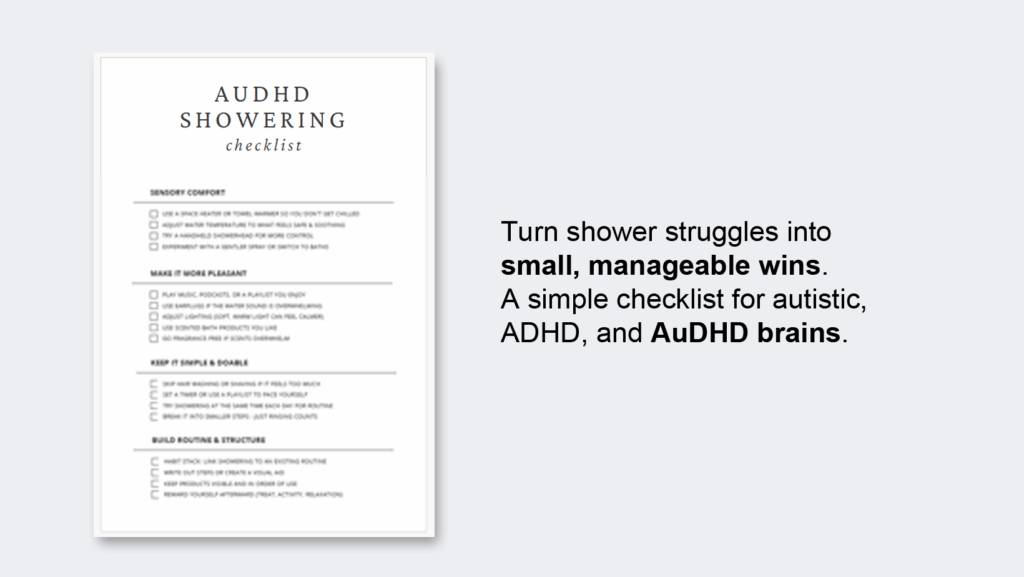
Download a free AuDHD showering checklist:
Did you find this blog post useful? Support Not Broken and get it (and my other ebooks) at a special price!
Not Broken: Working With Your AuDHD Brain is an ebook packed with practical AuDHD-friendly tips and lifehacks like the ones you’ve just read in this article, all collected in one place to make everyday life a little easier.
My Indiegogo campaign is now live! By backing it, you can help me cover the professional proofreading of Not Broken and get the book, or bundles of my ebooks and courses, at prices I don’t plan to offer again.

Be part of the process and grab my ebooks for an amazing price!
You can also be part of bringing this book to life! Soon I’m launching an Indiegogo campaign to help cover the cost of professional proofreading (which I need because I’m not a native English speaker). In the campaign, you can get this book plus all of my current ebooks and courses at an unprecedented price! I will probably not be repeating a major sale like this. The campaign will be running from 1st October here.



Helen Olivier is a neurodivergent writer, AuDHD explorer, and professional overthinker with 40+ years of lived experience in the wonderfully weird world of ADHD + autism. She writes for people who’ve been told they’re “too much” or “not enough,” offering comfort, clarity, and the occasional executive dysfunction survival hack. Her blog is her way of turning daily chaos into useful insights for other neurodivergent folks.