The Most Creative Ways to Overcome ADHD Paralysis
I ran across a Facebook post by Cherry ADHD asking about the most unhinged tips…

I ran across a Facebook post by Cherry ADHD asking about the most unhinged tips…

Time blindness makes life really difficult. When you’re lost in time, you forget appointments, run…

When you are both autistic and ADHD, building a morning routine may be hard, but…

Neurodivergent friendship can feel beautifully simple and wildly complicated at the same time. On good…

If you have an AuDHD brain and one alarm has never been enough to get you out of the door, you’re not failing at something simple. Using alarms for time blindness isn’t about discipline; it’s about supporting transitions your brain can’t track on its own. The real issue is a mismatch between how time is usually explained and how your brain actually experiences it. For a long time, I thought that needing more than one alarm meant I was disorganized, unmotivated, or just bad at mornings. In reality, the problem was never willpower. It was transitions, and being expected to make them instantly, without support.

If you’re neurodivergent and sensitive to sounds, everyday environments can often feel overwhelming: voices, background…

Since I was a little kid, creativity was driven by the small sparks of “otherworldly moments” I was experiencing often. It was a half-second of strange, wonderful feelings that seemed beyond this world. Only as an adult have I learned that some of the other people experienced them too. I wanted to share them with other people, to put them into images and words, no matter how imperfectly. I wanted to breathe life into them, to bring them inside this world. To this day, the highest compliment anyone can pay me on my art is that it made them feel.

AuDHD makes food difficult. When it comes to ADHD food needs, ADHD craves novelty every time, while autism demands the comfort of the safe few familiar meals. ADHD makes it hard to remember to eat – you may lose yourself in hyperfocus, and time blindness lets meal times slip away unnoticed. Autism creates sensory difficulties. Sometimes we are hungry but none of the food seems appealing, so we simply don’t eat. These ADHD food struggles make ADHD symptoms worse, which makes for even more missed meals. Oh, and are you often hangry, too?
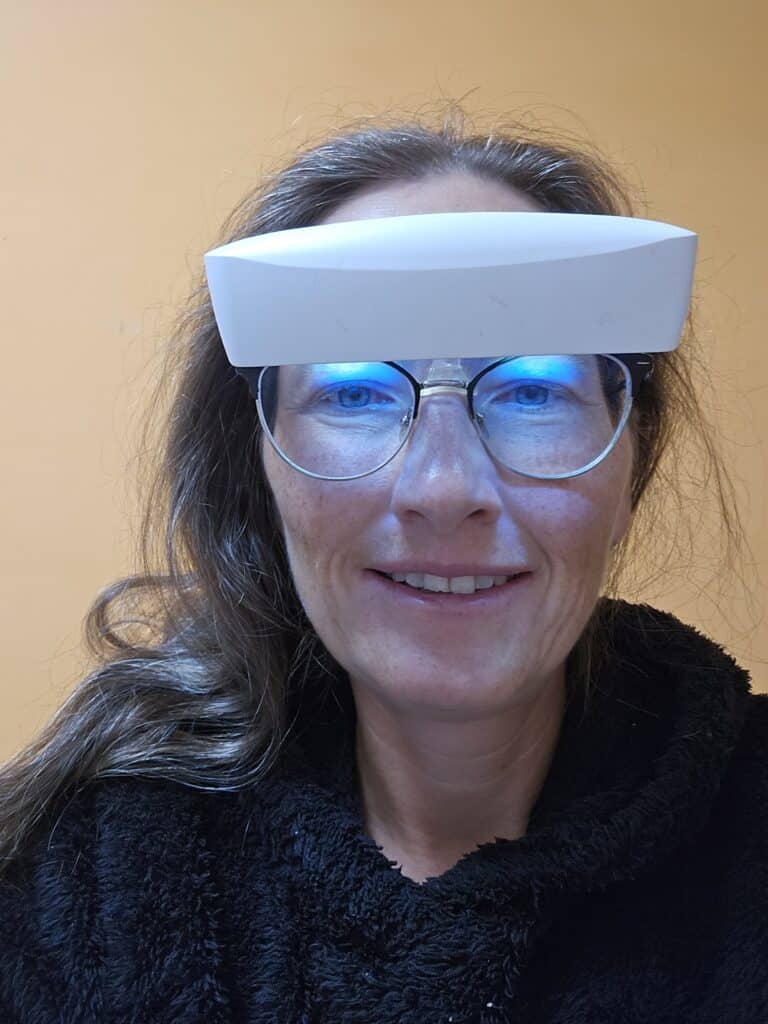
I’ve been experimenting with different ways to support my energy, focus, and mood, because let’s be real, living with an AuDHD brain can sometimes feel like riding a rollercoaster that forgot how brakes work. One tool I’ve been using for a while is light therapy, and I’ve had the Luminette light therapy glasses for some time now. Here’s my honest Luminette review.
Luminette glasses are basically wearable light therapy devices. Instead of sitting in front of a big, blinding lamp every morning, you just pop these glasses on and go about your usual routine. They shine a soft, blue-enriched white light into your eyes from above, mimicking natural daylight.
The idea is to help regulate your circadian rhythm (a.k.a. your internal clock) and boost serotonin, which can improve energy, mood, and sleep. They’re often recommended for seasonal affective disorder (SAD), jet lag, or just general sluggishness.

For most people, taking a shower is such a normal part of daily life that it hardly gets a second thought. But if you’re autistic, ADHD, or both (AuDHD), showering can feel like climbing a mountain. Maybe you put it off for days, maybe you dread it, or maybe you push through but feel completely drained afterward.
This isn’t about laziness or a lack of concern for hygiene. It’s about the very real sensory, executive function, and emotional challenges that come with being neurodivergent. The sound of rushing water, the feel of soap, the endless steps to remember… it can all add up to something overwhelming. And yet, because this struggle is rarely talked about, many of us end up feeling ashamed or “broken” for finding showering so hard.