If you’re neurodivergent and sensitive to sounds, everyday environments can become exhausting surprisingly quickly. Conversations happening at the same time, traffic, clattering dishes, buzzing electronics, loud music, children playing, or simply constant background noise can all add up until your nervous system has had enough.
For people with ADHD, autism, AuDHD, or other forms of sound sensitivity, this can mean irritability, difficulty concentrating, anxiety, fatigue, or full-on sensory overload. And unlike regular earplugs, you may not necessarily want to block the world out completely. Sometimes you just want everything to feel a little less loud, sharp, or intrusive while still being able to hear conversations and stay aware of what is happening around you.
Neurodivergent earplugs help with sensory overload
That is where neurodivergent earplugs and sound-filtering devices such as Loop Earplugs and Flare Calmer come in. They are two of the most popular options for people looking for help with sensory sensitivity, but despite often being compared, they work in very different ways.
So, Calmer vs Loop: which is better for sound sensitivity and sensory overload? I’ve tried both, and in this comparison I’ll look at how they feel, what kind of noise they help with, how much sound they reduce, and which one may work better for different neurodivergent sensory needs.
The links in this blog post are affiliate links, which means if you buy through them, I get a small commission at no extra cost to you. Thank you for your support!
Calmer vs Loop: The Short Answer
Choose Calmer if you want sounds to feel less sharp or irritating while still hearing conversations and your surroundings.
Choose Loop if your main problem is that the world simply feels too loud and you want noticeable sound reduction.
I personally prefer Calmer because I have tinnitus and dislike the plugged-ear effect I get with Loop.
How Calmer and Loop work differently: filtering vs. reducing
- Calmer doesn’t aim to turn down the volume. Instead, it reshapes how sound waves enter your ear and smooths out harsh, high-frequency peaks to make sounds less jarring, while keeping clarity.
- Loop, on the other hand, uses an acoustic filter to actively reduce sound level, lowering overall loudness so that ambient noise, chatter, or music isn’t as intense.
In short: Calmer modifies the quality of sound, Loop reduces the quantity of sound.
Quick comparison table
| Calmer | Loop | |
|---|---|---|
| Reduces overall volume | Very little | Yes |
| Keeps conversations natural | Better | Depends on model |
| Plugged-ear feeling | Minimal | More likely |
| Best for | Everyday sound sensitivity | Loud/overwhelming environments |
| Situational awareness | High | Lower |
| My experience with tinnitus | Better for me | Made mine more noticeable |
Calmer: What It Feels Like + Who It’s Best For
Using Calmer makes the sharp edges of sound softer. Voices, footsteps, and background hums don’t vanish, but they stop grating on your nervous system. For many neurodivergent and noise-sensitive folks, that translates to less anxiety, better focus, and less overwhelm, one reason they remain a popular choice among neurodivergent earplugs.

Best for: everyday sound sensitivity, conversations, shops, commuting.
Watch out for: it doesn’t make the world much quieter, so it may not be enough in very loud environments.
Want to try Calmer? Check the current price here.
Loop: What It Feels Like + Who It’s Best For
With Loop, the world turns down a notch. Sounds like traffic, chatter, or ambient noise become more distant and less uncomfortable. The reduction in volume can give real relief if you’re easily overwhelmed or overstimulated.
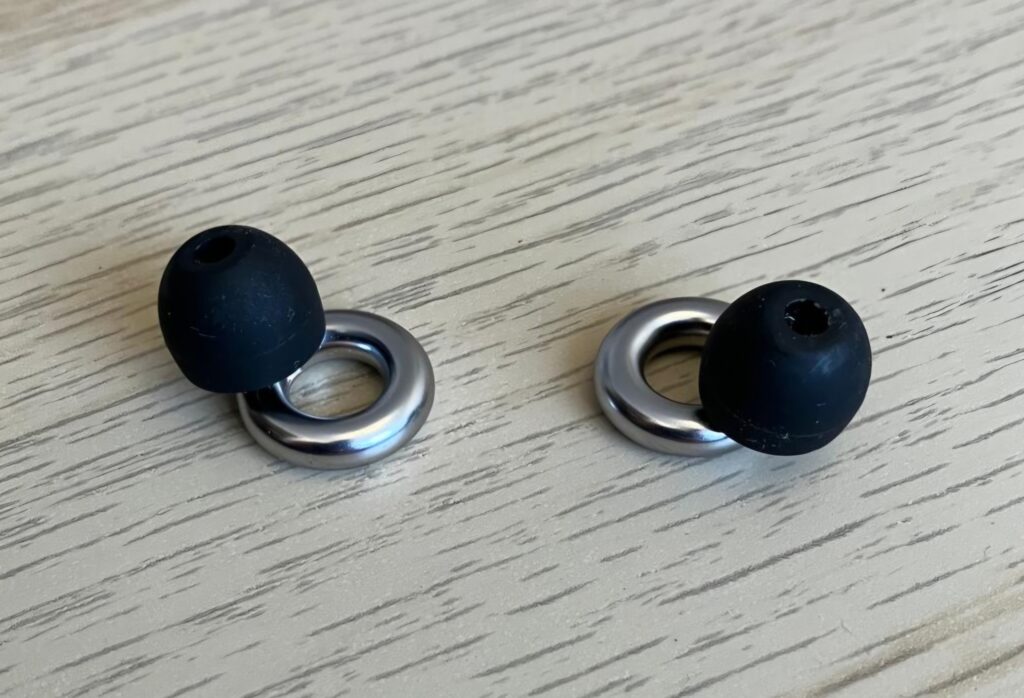
Because Loop comes in several versions, the best option depends on what you want to use them for.
Which Loop Is Best for Sound Sensitivity?
Not all Loop earplugs work the same way, so the best choice depends on what kind of sound bothers you most.
Loop Engage 2 is probably the best starting point for everyday sound sensitivity. It is designed for conversations, social situations, parenting, and noise sensitivity, so it takes the edge off background noise without shutting you off from the people around you. Loop also designed it to reduce the plugged-ear effect that can make your own voice sound strange.
Loop Quiet 2 is better when you want noticeably more quiet. It is designed for focus, travel, commuting, and sleep, so it makes more sense for situations where you do not need to hear conversations clearly and simply want less sound around you.
Loop Experience 2 is mainly designed for concerts, festivals, and other loud events. It reduces sound while trying to preserve the clarity of music, so I would look at this one if loud entertainment venues are your main problem rather than everyday background noise.
There is also Loop Switch 2, which combines three adjustable modes inspired by Engage, Experience, and Quiet. It may be useful if your sensory needs change throughout the day, and you want one pair that can move between conversations, noisy environments, and stronger sound reduction.
For everyday neurodivergent sound sensitivity, I would start by looking at Engage 2. If your main need is simply making the world much quieter, Quiet 2 may be a better fit.
Best for: when overall volume is the main problem and you want noticeable sound reduction.
Watch out for: the plugged-ear effect, muffled speech, and reduced situational awareness may bother some people.
Think Loop sounds like a better fit? Check the available Loop models here.
Which Is Better for Different Situations?
For conversations and social situations: Calmer
If you want to hear the natural sound of speech and stay connected with your surroundings.
For public transport: depends
Calmer is my choice if the volume of the noise isn’t too big. If it is the main problem, Loop may be a better choice.
For supermarkets: Calmer or lower-reduction Loop
Calmer can soften the sensory edge, while a lower-reduction Loop can help when the overall volume is simply too much.
For concerts: Loop / proper hearing protection
For concerts, Loop can help reduce the intensity of loud music while still keeping it clear, but make sure you choose a model designed and rated for hearing protection in loud environments.
For working and concentration: Loop if background noise distracts you
Loop can be helpful if chatter, office noise, or other background sounds keep pulling your attention away, because it reduces the overall volume and makes distractions easier to tune out.
My Experience With Calmer, Loop and Tinnitus
I wanted to love Loop because the sound reduction is much more noticeable. Unfortunately, I find the plugged-ear effect uncomfortable, and reducing outside noise makes my tinnitus much more noticeable while I’m wearing them.
Calmer works much better for me personally. The effect is subtler, but I can wear them while talking to people without feeling like my voice is coming from inside my head. They also don’t aggravate my tinnitus in the same way.
So even though Loop gives me more actual quiet, Calmer is the pair I can realistically use in everyday life.
That said, my experience definitely isn’t universal. A friend bought the Loop pair I tested and happily wears them to concerts, so they may still be a great option if the plugged-ear feeling doesn’t bother you.
Verdict: Calmer or Loop?
Calmer = everyday sound sensitivity without shutting the world out
Loop = more noticeable sound reduction when the world feels too loud
For me, Calmer wins, but the better choice for you depends on whether you want to change how sound feels or simply hear less of it.
Are you searching for neurodivergent tools?
Check out also my blog post about ADHD glasses and my review of the Luminette glasses.
Did you find this blog post useful? Support Not Broken and get it (and my other ebooks) at a special price!
Not Broken: Working With Your AuDHD Brain is an ebook packed with practical AuDHD-friendly tips and lifehacks like the ones you’ve just read in this article, all collected in one place to make everyday life a little easier.
My Indiegogo campaign is now live! By backing it, you can help me cover the professional proofreading of Not Broken and get the book, or bundles of my ebooks and courses, at prices I don’t plan to offer again.



Helen Olivier is a neurodivergent writer, AuDHD explorer, and professional overthinker with 40+ years of lived experience in the wonderfully weird world of ADHD + autism. She writes for people who’ve been told they’re “too much” or “not enough,” offering comfort, clarity, and the occasional executive dysfunction survival hack. Her blog is her way of turning daily chaos into useful insights for other neurodivergent folks.