For most of my life, I thought there was something fundamentally wrong with me. I just couldn’t figure out what it was. And apparently, neither could anyone else.
I desperately tried to understand why everyone around me seemed to be functioning, while I was struggling so much. I often had the feeling that everyone got a manual for life at birth, except me.
If I could have one book back then, I wish it told me something completely different from all the typical productivity advice. I wish it told me I was allowed to do things in unusual ways, if unusual was what worked for me. I wish it told me I could go easy on myself, and that this way, I would actually accomplish more. I wish it told me I could live myself just as I am.
I Spent Years Trying to Fix Myself
I was late. Oh, how late I was everywhere. I tried setting an alarm for when I was supposed to leave the house, just for it to catch me completely unprepared and in the middle of something.
I was disorganized. I tried lists, and lists of lists, and they didn’t magically make me more productive. They just gave me more paperwork.
I had a messy room. I tried guilting myself into cleaning, but that worked for 20 minutes, during which I spread out the contents of one drawer on the floor to better organize them, and ended up with more chaos than I began with.
And all the time, I thought, if I just tried harder, maybe one day I’d finally become a normal, functioning adult.
The more I failed, the more I got the feeling that the problem wasn’t with the strategies I tried. The problem seemed to be myself.
Getting My AuDHD Diagnosis Changed the Story
When I found out I was autistic and had ADHD, this conviction slowly changed as I learned more about what those diagnoses mean.
I thought I was lazy, when in fact, I was grappling with executive dysfunction.
I thought I was inconsiderate when, in fact, my problem was time blindness. (When I learned time blindness existed, I cried.)
I thought I was too sensitive, when in fact, I had sensory difficulties.
I learned I needed routines, but my brain rebelled against those routines at the same time. I craved both novelty and sameness. No wonder I was always so conflicted.
My diagnosis didn’t magically solve all of my problems. But it gave me a new lens through which to look at them. And when I was able to stop blaming myself, I was able to actually start looking for the solutions.
The difficulties were still there. But for the first time, they started making sense. And for the first time, I didn’t feel helpless.
What I Wish Someone Had Told Me Earlier
If I could talk to my younger self, there is so much I would like to say to her.
You don’t have to measure yourself against another person’s successes. You are playing the game called life on the hard setting. You have to work harder than them for the same result. But none of that means you are failing. You are doing the best you can with an immense handicap.
You don’t have to force yourself to follow the traditional career path: high school, college, be a professional. While you loved high school so much that when you had to leave, you fell apart, college was HARD for an undiagnosed autistic. You don’t need to push yourself so hard to succeed, and you don’t need to blame yourself when you succeed just by the skin of your teeth. You can give yourself grace.
You are not inconsiderate and a bad friend. You are struggling so hard that you are barely holding yourself together, and so your brain is shutting down the non-essential functions.
You are not a bad dog momma. Your dog loves you and forgives you when you take him for a walk an hour later than usual.
You are not a sloth just because your room is a disaster zone. You are overwhelmed and don’t have a system that would work with your brain.
You don’t need to earn rest. You could rest first and do the work later, when you are fresh. You can do things in different ways than everyone else.
And your value as a person doesn’t lie in your productivity.
You sweet child, you are not broken.
From Trying to Fix Myself to Finding What Actually Helps
After I had a name for my struggles, I could finally start learning about ways to do things that would work with my brain. Once I stopped asking myself, “How can I become more like everyone else?” I started asking a much more useful question. “What would actually make this easier for me?”
I started researching and brainstorming and came up with different ways to do things, more neurodivergent friendly ways. Some strategies that I tried failed, some spectacularly. Some worked for a time and then stopped working when the novelty wore off. And some actually made my life easier.
I started creating visible reminders instead of relying on memory alone. If I needed to do something, I would write it in big, blocky letters on a piece of paper that I left on my desk, where I’m certain to look. I would do it as soon as I first thought of the thing and remove the paper until it was crossed off.
I started cleaning in 15-minute bursts and allowed myself to stop or switch tasks after that time. And I started using doom boxes to sort later for getting rid of clutter quickly.
I stopped trying (and failing) to cook every day and instead started making big batches of meals for the freezer when I had the energy. I ask ChatGPT for meals that I’m able to cook in one pan and under 30 minutes, so the preparation and cleanup aren’t difficult.
I started timing how long everyday activities take me so that I didn’t need to rely on inaccurate guesses. I started setting two alarms for departure, one for the time I needed to start getting ready, and one for going out of the door.
None of these changes required me to become more disciplined. They just removed some of the obstacles that made ordinary things unnecessarily difficult.
Of course, it doesn’t mean my life is magically perfect. I still struggle with a lot of things. But these strategies make a tangible difference in the quality of my life.
And somewhere along the way, I started writing about those strategies and experiments on my blog.
How My Blog Posts Slowly Became Not Broken
Originally, I didn’t set out to write a book. I just wanted to share what I learned on my blog. But as the number of blog posts grew, I realized that a lot of the older ones were getting lost in the internet abyss.
Gradually, I had a growing number of texts that were connected by the topic of how to better live with an AuDHD brain, instead of constantly fighting against it.
So I decided to put them into one collection, complete with bonus materials that supplement some of the chapters. And so Not Broken was born.
Why that name? I found it fitting. For so long, I believed I was broken, that there was something fundamentally wrong with me. Many undiagnosed neurodivergent people believe the same. And it isn’t true.
The lifehacks and strategies in the book help you to un-break your life even a tiny bit. Inside, you will find tips for navigating everyday life with AuDHD, including executive dysfunction, time blindness, home organization, sensory sensitivities, and, perhaps most importantly, self-acceptance.

The Book I Wish I’d Had Before My AuDHD Diagnosis
So what would Not Broken give to me if I had it before my diagnosis? Probably it wouldn’t change everything. It wouldn’t magically rid me of my problems, and it wouldn’t give me an answer for every question.
But it would be a beginning. A starting point. A way to start figuring things out.
It might have helped me feel less alone. It could have shown me that there are other people who find seemingly ordinary things extraordinarily difficult. And perhaps most importantly, it might have helped me stop seeing every struggle as a personal failure.
I can’t give my younger self this book. But perhaps I can give it to someone who needs to hear those words today.
You Were Never Broken
For years, I was searching for a way to fix myself. It turned out there was nothing that needed fixing other than the expectations I placed on myself about how my life should work and what I should be able to manage.
Today I’m no longer looking for ways to become someone else. I’m actively searching for ways to create a life that would work for me as I am.
If there’s one thing I hope readers take away from Not Broken, it’s this: You don’t have to become a different person to deserve a life that works for you.
Help Bring Not Broken to Life!
Not Broken is currently on Indiegogo! I’m raising $300 to help cover the final proofreading costs. In the campaign, you can get all of my books for greatly discounted prices. If this story resonates with you, I’d be incredibly grateful for your support. Even if you can’t support the campaign, it would mean a world to me if you could share it with someone who possibly could.
The campaign runs until November 15, 2026.


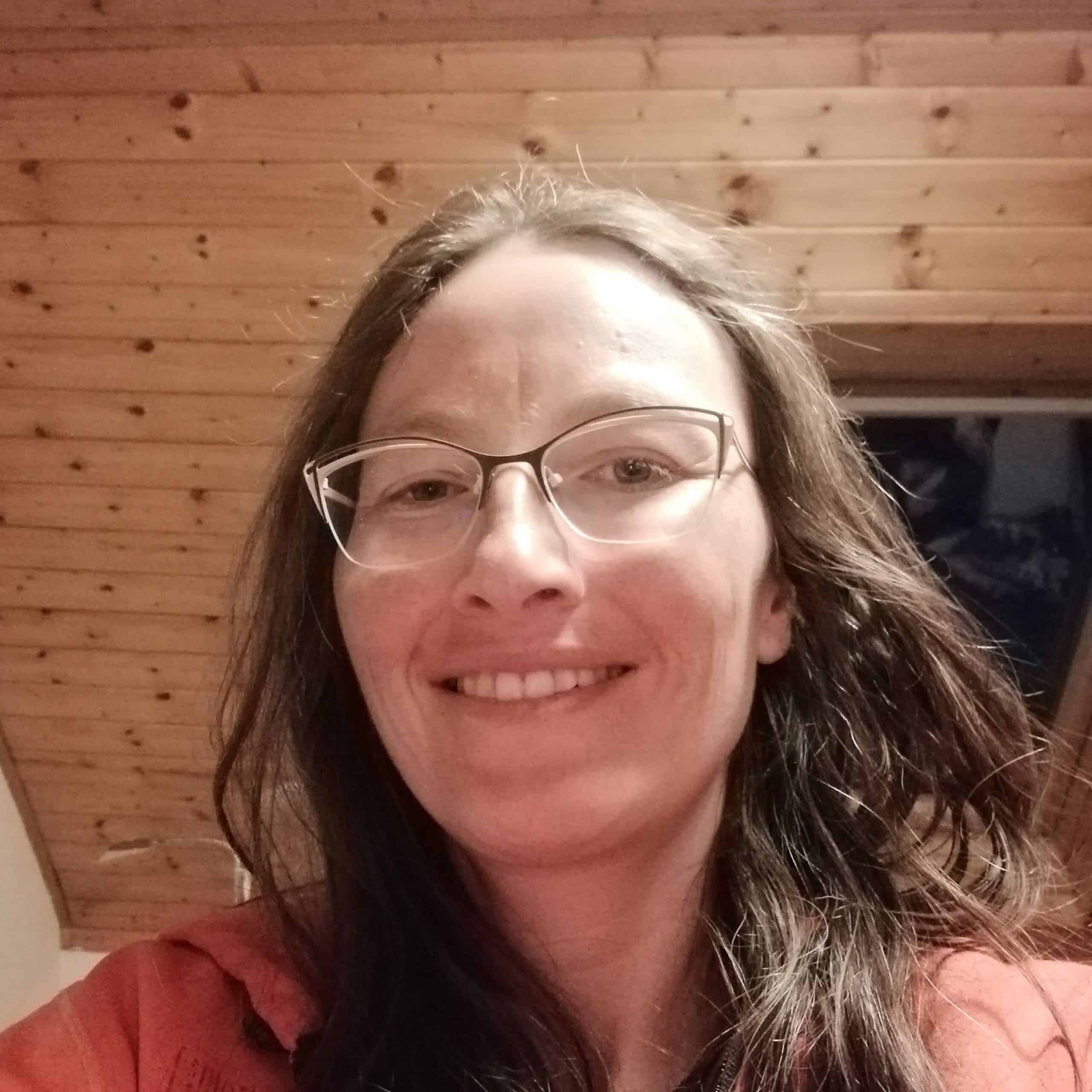
Helen Olivier is a neurodivergent writer, AuDHD explorer, and professional overthinker with 40+ years of lived experience in the wonderfully weird world of ADHD + autism. She writes for people who’ve been told they’re “too much” or “not enough,” offering comfort, clarity, and the occasional executive dysfunction survival hack. Her blog is her way of turning daily chaos into useful insights for other neurodivergent folks.