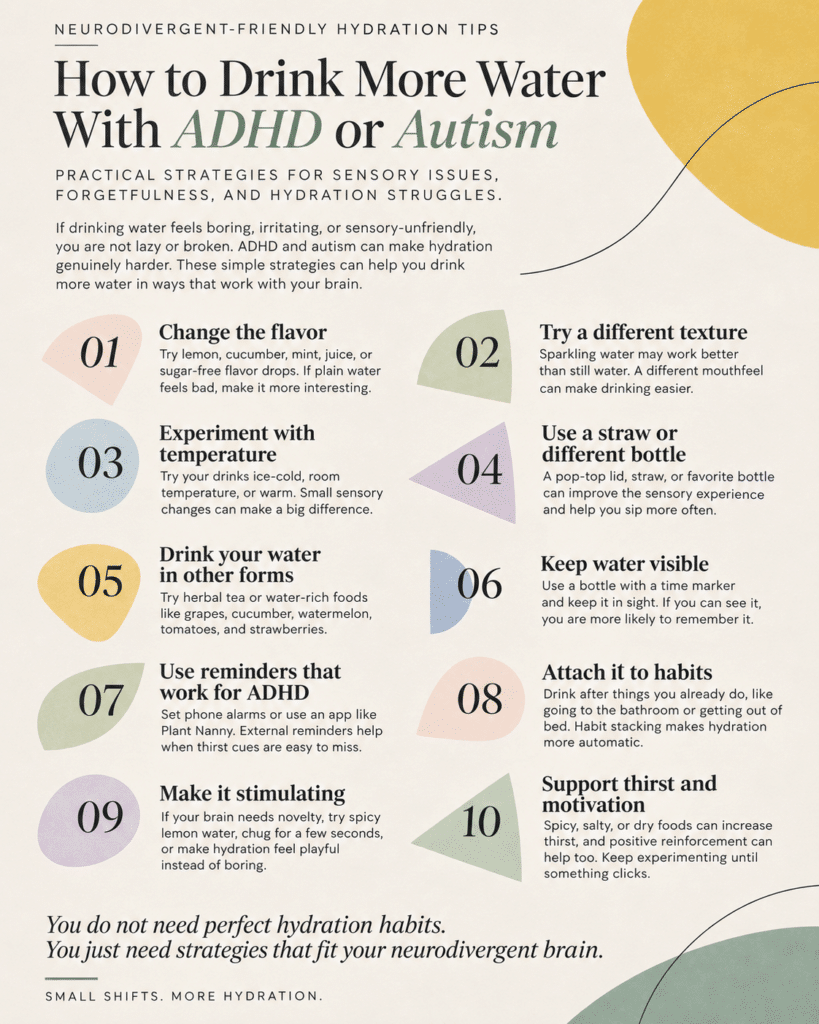
If you have ADHD or are autistic and struggle to drink enough water, the trick is to make drinking easier, more enjoyable, and harder to forget. Keep a water bottle where you can see it, set reminders in your favorite app, or attach drinking to something you already do every day. If you hate the taste or sensation of plain water, experiment with flavors, different temperatures, straws, or sparkling water. Whether you keep forgetting to drink or simply can’t stand water, here are some AuDHD-friendly tricks that might actually help.
Why drinking water is hard with ADHD and autism
If you’re neurodivergent, staying hydrated can be harder than it sounds. Autism may bring sensory issues or difficulty noticing thirst, while ADHD can make you forget to drink for hours or treat water as just another boring task. The good news is that different problems need different solutions.
Disclaimer: This blog is based on personal experience and is not medical advice. Always consult a qualified healthcare professional before making changes to your health, treatment, or medications. This article contains affiliate links. Thank you for your support!
What’s making hydration hard for you?
Different problems need different solutions. Start with the one that sounds most like you:
What’s making hydration hard for you?
Different problems need different solutions. Start with the one that sounds most like you:
→ Try the sensory-friendly hydration ideas below.
→ Focus on reminders, visible water, and making drinking part of your routine.
→ Don’t rely on thirst alone. Attach drinking to things you already do every day.
→ Reduce the number of steps and keep water within easy reach.
You don’t need to try every strategy in this article. Start with the problem that gets in your way most often and experiment from there.
Why autistic people may struggle to drink water
For autistic people, drinking water can be an unpleasant experience because of sensory sensitivities. You might dislike its taste, temperature, or the way it feels in your mouth. Some autistic people are even sensitive to subtle differences in the taste of water from different sources. Some autistic people may also have trouble noticing internal body signals like thirst, which can make it easier to forget to drink.
Is not liking water a sign of autism?
Not liking water isn’t a sign of autism by itself, and it certainly isn’t enough to suggest that someone is autistic. But autistic sensory differences can make plain water surprisingly unpleasant for some people. Research suggests that autistic people can experience differences in taste and sensory processing, although these experiences vary a lot from person to person.
Some autistic people may also have difficulty noticing or interpreting internal body signals such as thirst. The research on interoception in autism is mixed, but differences in thirst awareness have been reported.
So if you’re autistic and hate drinking plain water, the goal doesn’t have to be forcing yourself to “just drink water.” Try changing the flavor, temperature, texture, container, or type of drink until you find something your sensory system actually tolerates.
Why don’t I feel thirsty?
Thirst isn’t always a perfectly reliable signal. Some people don’t notice it until they’re already somewhat dehydrated, and difficulties with interoception can make those internal signals even easier to miss. Interoception is your ability to notice and interpret what is happening inside your body, including hunger, thirst, temperature, and the need to use the bathroom.
For autistic people, research on interoception is mixed, but some studies report difficulties recognizing or interpreting thirst and other internal body signals. That means you might not get a clear “I’m thirsty” feeling even when your body needs fluids.
If this sounds familiar, it can help to rely less on thirst alone. Try drinking at regular points in your day, pairing water with habits you already have, or keeping a drink visible and within reach. You can also pay attention to other signs of dehydration, such as darker urine, dry mouth, tiredness, dizziness, or urinating less often.
How to make drinking water more sensory-friendly
- Try adding a flavor: juice, lemon, cucumber, mint leaves, a zero-calorie water enhancer like Mio drops, or even flavoring drops with electrolytes.
- A herbal tea is also a good option for hydration. If you don’t like it hot, you can let it cool overnight in the fridge.
- Try sparkling water for a different texture.
- Try a different temperature for your drink. Make it hot or cold.
- Add ice to your drink.
- Use a bottle with a pop-top lid for a different sensory experience
- Try drinking out of a straw
- Try eating your water instead. Eat grapes, watermelon, cucumber, tomatoes, or strawberries.
How to remember to drink water when you don’t feel thirsty
If you struggle with interoception, waiting until you feel thirsty might not work very well. Instead, try making drinking water part of your daily routine, so you don’t have to rely on your body’s thirst signals.
- Drink at specific times. For example, have a glass of water when you wake up, with meals, and before going to bed.
- Pair drinking with an existing habit. Take a few sips whenever you brush your teeth, take your medication, or sit down at your computer.
If you struggle to remember to drink, check out the ADHD hydration tips below. They’re just as useful when you have trouble recognizing thirst.
Why does ADHD make you hate drinking water?
If you have ADHD, drinking water can feel difficult in ways that other people don’t understand. It’s not just that you forget (although that often happens with hyperfocus). Many people with ADHD find even the idea of drinking irritating, too boring, or like an unwelcome interruption of a more interesting activity. ADHD brains crave stimulation, novelty, and a sense of reward, and plain water offers none of that. There’s no flavor, no immediate payoff, so your brain may quietly categorize it as “low priority” and let it slide.
Why people with ADHD forget to drink water
If you have ADHD, you might go hours without drinking water simply because your brain is busy doing something else. Hyperfocus can make you lose track of time and ignore your body’s signals. The ADHD distractibility and working memory problems can make you forget about that glass of water you poured three hours ago. Even when you remember, getting up to refill your glass might feel like an annoying interruption. And before you know it, it’s evening, and you’ve had approximately three sips of water all day.
Is forgetting to drink water a sign of ADHD?
Forgetting to drink water can be related to ADHD, but it’s not an official ADHD symptom or enough to suggest a diagnosis on its own. However, several ADHD traits can make it surprisingly easy to go through an entire day without drinking enough.
Forgetting to drink doesn’t automatically mean you have ADHD. Stress, busy schedules, and other factors can also interfere with hydration. But if you have ADHD and regularly forget to drink, external reminders and making water visible and easily accessible can help you stay hydrated.
How to remember to drink water with ADHD
If you have ADHD and keep forgetting to drink water, don’t rely on your memory or thirst alone. Make hydration easier by using reminders, building it into your daily routines, and finding ways to make drinking water more fun. Here are some ADHD-friendly tricks to try.
Make drinking water require fewer steps
Sometimes the problem isn’t remembering that water exists. It’s that getting a drink involves just enough tiny steps to make my ADHD brain decide it can wait.
So I try to remove as much friction as possible. I keep water directly on my desk instead of somewhere across the room, refill it before I sit down to work, and use a bottle or glass that is easy to drink from without fiddling with lids or caps. If you tend to stay in several places during the day, you could even keep a bottle in each of them.
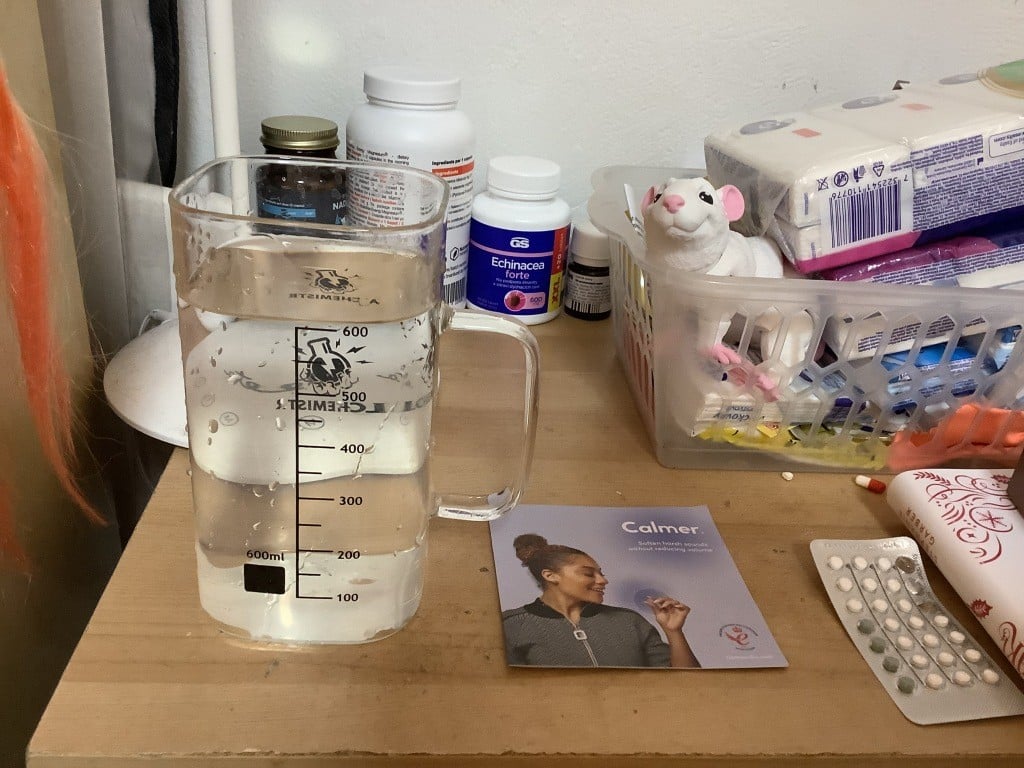
The easier drinking water is, the more likely you are to do it without having to consciously talk yourself into it. For me, having a glass right beside my elbow works particularly well because I often reach for it automatically while I’m working.
- Get a water bottle with a time marker and put it somewhere readily available and within your line of sight.
- Set an alarm on your phone to remind you to drink water.
- Use the Plant Nanny app that will remind you to drink (when you don’t, the cute flowers in the app will wilt!)
- Set drinking water as one of your goals in the self-care app Finch
- Keep a bottle of water by your bedside and drink it first thing in the morning.
- When you remember to drink, take several sips instead of just one.
- Keep water in the places where you spend most of your time.
- Refill your glass or bottle before you sit down to work
- Subscribe to r/hydrohomies on Reddit for some positive reinforcement.
- Find something that you already do multiple times a day and attach drinking water to this habit. This technique is called habit stacking, and it can be wonderfully helpful. But if the connection between two habits suddenly disappears, here’s how I experimented with fixing a broken habit stack
- Change the reminder when you start automatically ignoring it.
I tried three ways to remember to drink water with AuDHD
I don’t struggle with the taste or texture of plain water – in fact, I rather like it and prefer it to sodas and strongly flavored drinks. But my ADHD makes me forget to drink, especially when I’m immersed in an activity. So I decided to do a little experiment and tried three ways of reminding myself to drink.
- I set up notifications in Finch, a self-care app I use.
- I placed a 0.4-liter glass and a bottle of my favorite slightly flavored mineral water on my work table so that I would have it right beside me when I work
- I tried to make drinking water a part of my morning habit stack.
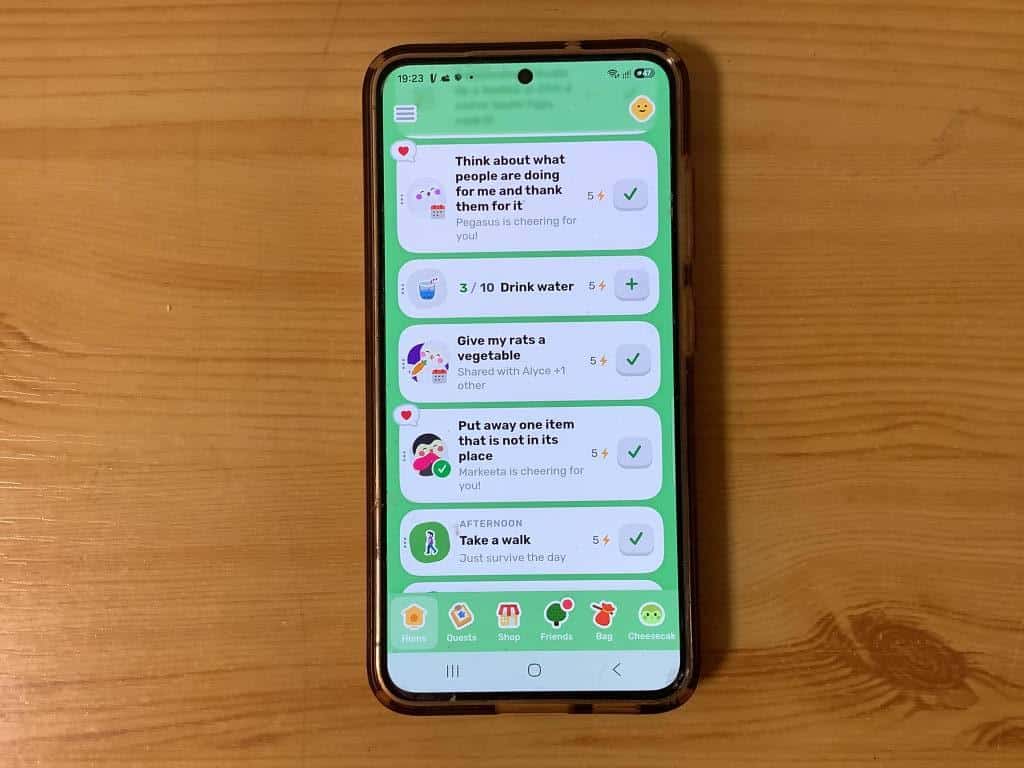
Finch helped somehow, mostly in that I felt more motivated because I get rewards for checking off goals in the app. But it didn’t help me much with remembering to drink. The app can send a reminder for a goal, but only once a day at a set time.
The glass of water by my elbow was more effective. When I have a drink within easy reach, I often take a gulp automatically, without thinking. I think I’m onto something!
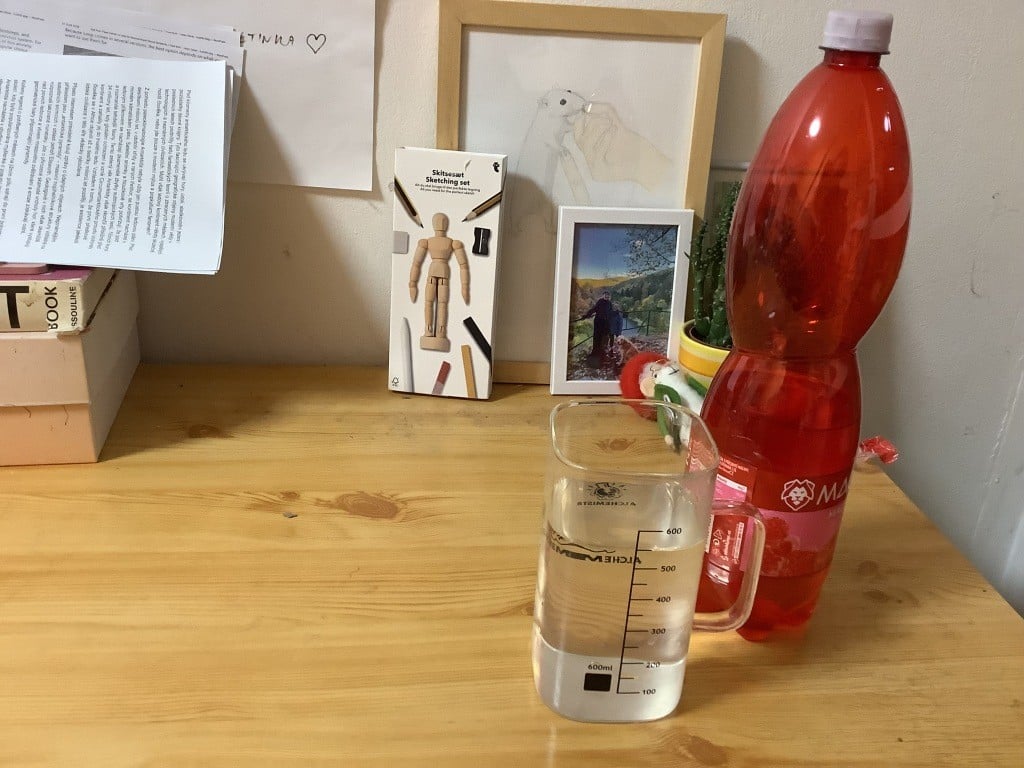
Another interesting option was adding drinking a set amount of water as a part of my morning routine, right after I take my meds. I need to drink water with my meds anyway, so it was just a question of slightly adjusting the routine. The disadvantage is that this is only one time of day, and I need to drink throughout.
| Method | Did it help me remember? | What was the problem? | Would I keep using it? |
|---|---|---|---|
| Finch reminders | A little | The rewards made drinking more motivating, but Finch could only remind me about the goal once a day. | Yes, as extra motivation |
| Water right beside me | Yes — the most | I still had to remember to refill it, but when water was within reach, I often drank automatically. | Definitely |
| Morning habit stack | Yes | Pairing water with taking my meds worked well, but it only covered one part of the day. | Yes, combined with other strategies |
My winner? Keeping water directly within reach. I didn’t need to remember to drink nearly as often because I would simply reach for it automatically.
Finding ADHD and autism hydration strategies that work for you
Hydration isn’t just about water. It’s about giving your body and brain what they need to function, feel, and focus. Drinking your water isn’t always simple. If it’s hard for you, that doesn’t mean you’re deficient somehow. It means your brain works differently, and you might need different strategies. That’s okay. Whether you’re tweaking the taste, playing with temperature, or setting reminders on your phone (or Plant Nanny), use what works for you.
My own experiment taught me that the best hydration strategy isn’t necessarily the cleverest one. For me, simply putting water within arm’s reach worked better than an app reminding me to drink. Your winner may be completely different, and that’s exactly why experimenting matters.
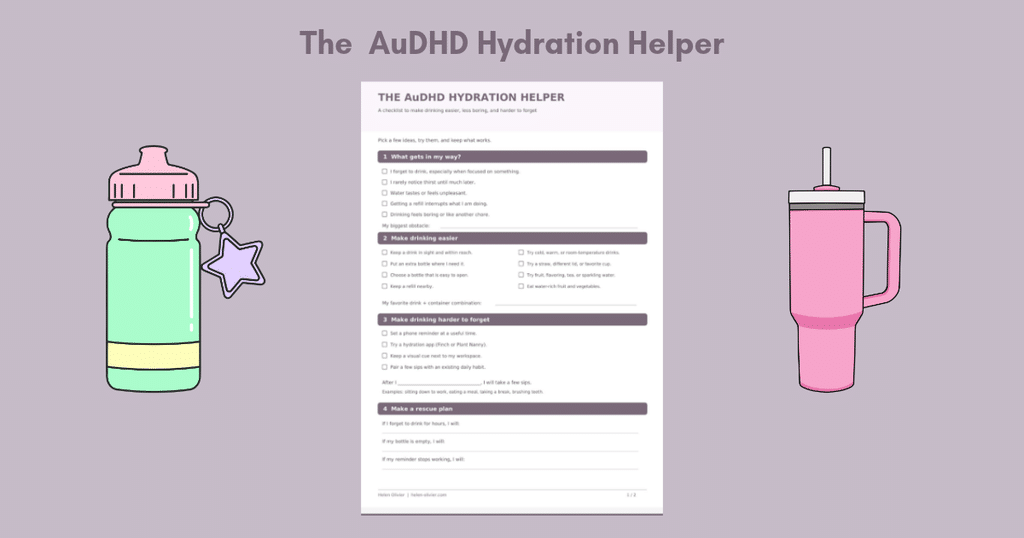
Need more help with hydration? Download my free checklist!
Want to make drinking water easier? I’ve created a free ADHD & Autism Hydration Checklist to help you figure out what’s getting in your way and find strategies that actually work for you. It includes sensory-friendly tips, reminders, habit-stacking ideas, and a 3-day experiment to help you build your own hydration system.
Did you find this blog post useful? Get my new book of AuDHD lifehacks with a discount! Only until November 15th.
Not Broken: Working With Your AuDHD Brain is an ebook packed with practical AuDHD-friendly tips and lifehacks like the ones you’ve just read in this article, all collected in one place to make everyday life a little easier.
My Indiegogo campaign is now live! By backing it, you can help me cover the professional proofreading of Not Broken and get the book, or bundles of my ebooks and courses, at prices I probably won’t offer again.


Helen Olivier is a neurodivergent writer, AuDHD explorer, and professional overthinker with 40+ years of lived experience in the wonderfully weird world of ADHD + autism. She writes for people who’ve been told they’re “too much” or “not enough,” offering comfort, clarity, and the occasional executive dysfunction survival hack. Her blog is her way of turning daily chaos into useful insights for other neurodivergent folks.
This blog is based on personal experience and is not medical advice. Always consult a qualified healthcare professional before making changes to your health, treatment, or medications.




An excellent and informative read! I appreciate how this site offers
so much useful content.
Thank you so much! I’m really glad you found the post helpful. It means a lot to know that my writing here is making a difference. 😊 If there’s ever a topic you’d like to see covered, feel free to let me know!