Addiction is an extremely difficult topic for me, and yet, so important to talk about.
People with ADHD are at a much higher risk of addiction (1) than the neurotypical population. 50% of adults with ADHD have a history of substance abuse at some point in their lives, compared to 25% of neurotypicals. A whopping half of adults with ADHD have struggled, struggle, or will struggle with substance abuse.
But one thing can help prevent this.
Timely ADHD treatment can lower the probability of substance abuse by 50%, according to Dr. Wilens (2). Which, if my math maths, gets us to the normal numbers for a neurotypical population. When our brains get the dopamine they need through medication, we are much less likely to chase it through impulsive decisions and intoxication.
Treatment makes our natural disadvantage disappear. I never knew how important it was.
Disclaimer: This blog is based on personal experience and is not medical advice. Always consult a qualified healthcare professional before making changes to your health, treatment, or medications.
ADHD and addiction: why treating one helps manage the other
Untreated ADHD makes it more difficult to treat addiction (and vice versa). A lot of people who are in recovery relapse if their ADHD goes untreated. Without medical intervention, ADHD makes for higher impulsiveness and lower ability to tolerate frustration, which are both risk factors for addiction.
Treatment usually means stimulants, which are controlled substances. But wouldn’t taking them lead to addiction? Research shows that this is an unfounded fear. Stimulants help lower the rate of addiction in people with ADHD (3) by 7,3 percent. Other forms of treatment, like non-stimulant medicine, behavioral interventions, accommodations, and therapy, can also help.
Why are people with ADHD at a higher risk of addiction?
It has to do with many traits of ADHD. The need for immediate gratification. The search for a jolt of dopamine, which the substances or addictive behaviors provide. The thrill-seeking behavior and search for novel experiences. On top of that, people with ADHD are much more likely to be stressed than their neurotypical peers, which is also a risk factor for addictive behaviors.
The vast majority of people with ADHD don’t use substances to get high, but to self-medicate their ADHD (4). With alcohol, the mind can seem quieter. With stimulants like cocaine, you can focus better. But all of these things make the ADHD symptoms worse in the long run.
Think you don’t have an addiction? ADHD can mask the signs
ADHD brains are wired for stimulation (5), novelty, and relief from overwhelm—so when a substance provides a moment of calm, focus, or escape, it can feel less like addiction and more like survival. This makes it incredibly easy for addiction to sneak in unnoticed. You might think, I’m just using this to function, or I can stop anytime, when things calm down. But ADHD often distorts self-awareness around impulsivity and emotional regulation, which makes it harder to recognize when “using” has become “needing.”
To complicate things further, many ADHDers struggle with interoception (6)—the ability to notice what’s happening inside their own bodies and minds. That means signs like withdrawal symptoms, increasing tolerance, or compulsive use can fly under the radar. You may not feel like you’re addicted because you’re still “managing” life (sort of), but that doesn’t mean dependency isn’t forming. If you have ADHD and you’re using anything, whether it’s caffeine, kratom, weed, alcohol, to feel “normal,” it’s worth pausing to ask: Is this helping me thrive, or just helping me cope?
ADHD and addiction symptoms: how to recognize the warning signs
According to Carl Sherman, PhD (7), addiction is not as much about how much of a substance you take or how often, but rather about how it impacts your health, relationships, work or school, and your standing with the law. And addiction is not only substance consumption. Addictive behaviors like internet addiction, shopping addiction, or food addiction also fit the bill and can cause grave problems.
Among the symptoms of addiction (1) are:
- Strong and urgent cravings
- No control over consumption
- Continued use despite negative consequences
- Inability to stop even when you want to
Still healing from what was meant to heal me
But for me, this isn’t just a series of facts and data. It’s personal.
Once you have been addicted, your brain will always know how to be addicted. It’s hard for me to accept that the wrong patterns are now seared in my brain, forever. That I’m at risk until the end of my life and that I have to be careful, always oh-so-careful. I feel like I have lost an important freedom. I mourn it.
My therapist said that you can come to terms with addiction only after you see that your life is much better sober, and I’m not there yet. The protracted withdrawal syndrome is making my life a living hell.
One day.
One day, I will be okay with this all, hopefully.
I didn’t chase addiction (does anyone ever?). It came to me stealthily, disguised as care and love. A psychiatrist prescribed me benzodiazepines and Zolpidem for daily use after my autistic burnout. Then one day, my ex brought home kratom and told me that it’s a bit addictive, but not that much, and better than benzodiazepines. So I took it.
And then, after some time, my new psychiatrist told me that it’s actually VERY addictive, and to quit it right away – which I did, tapering over the course of several months – but she also upped my dose of benzos to make it easier. And then it was impossible to quit.
I trusted my former boyfriend, and I trusted both of the doctors, but I shouldn’t have. It has damaged me for life.
I wish this story had a clean arc, a tidy ending, a redemptive bow. But it doesn’t, not yet. Right now, I’m sitting with the weight of what happened, with the grief and the rage and the endless what-ifs. I’m still picking up pieces of a self that feels permanently altered. Maybe I’m even traumatized by the experience.
But I’m also still here. Still trying. Still hoping that one day, hopefully soon, my damaged brain will heal, feelings will return to my world, and I will thrive again. I’m not there yet. I still struggle. But slowly, day by day, it’s getting better.
I would not choose this story for myself. But if nothing else, maybe someone out there will read this and feel less alone. Less ashamed. Less gaslit by the system that was supposed to help.
That would be something. That would be enough for today.
Sources:
(1) https://www.additudemag.com/addictive-behaviors-adhd/
(2) https://pubmed.ncbi.nlm.nih.gov/14529324/
(3) https://www.sciencedirect.com/science/article/abs/pii/S0927537116300665
(4) https://childmind.org/article/adhd-and-substance-abuse/
(5) https://www.additudemag.com/brain-stimulation-and-adhd-cravings-dependency-and-regulation/
(6) https://onlinelibrary.wiley.com/doi/10.1111/psyp.14750
(7) https://www.additudemag.com/the-truth-about-adhd-and-addiction/

Are you a walking contradiction?
Having an AuDHD brain is a challenge. You fit some criteria for both autism and ADHD, but you don’t find yourself in them, not completely.
In some things, you are the complete opposite of autism. In some ways, you are the complete opposite of ADHD. And you always want two different things at once. You are constantly pulled in two completely opposite directions.
It’s exhausting. And difficult to navigate.
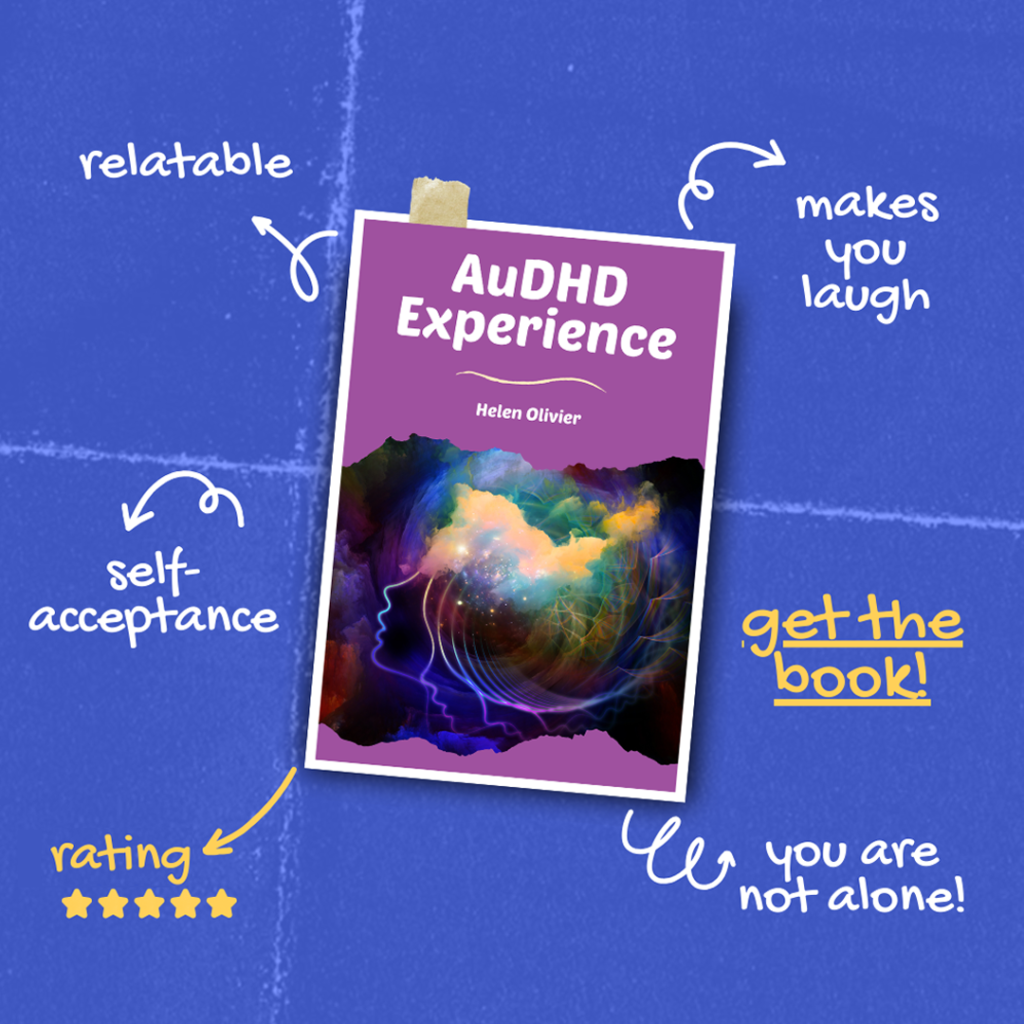
In the ebook AuDHD Experience, I talk about the constant inner conflict. About autistic days and ADHD days. About the AuDHD burnout and why it’s so hard to get out of it. About balancing these two very different sets of needs – and about self-acceptance, despite the odds. If you want to feel that someone gets you, this ebook is just the thing for you. Check it out now!


Helen Olivier is a neurodivergent writer, AuDHD explorer, and professional overthinker with 40+ years of lived experience in the wonderfully weird world of ADHD + autism. She writes for people who’ve been told they’re “too much” or “not enough,” offering comfort, clarity, and the occasional executive dysfunction survival hack. Her blog is her way of turning daily chaos into useful insights for other neurodivergent folks.
This blog is based on personal experience and is not medical advice. Always consult a qualified healthcare professional before making changes to your health, treatment, or medications.