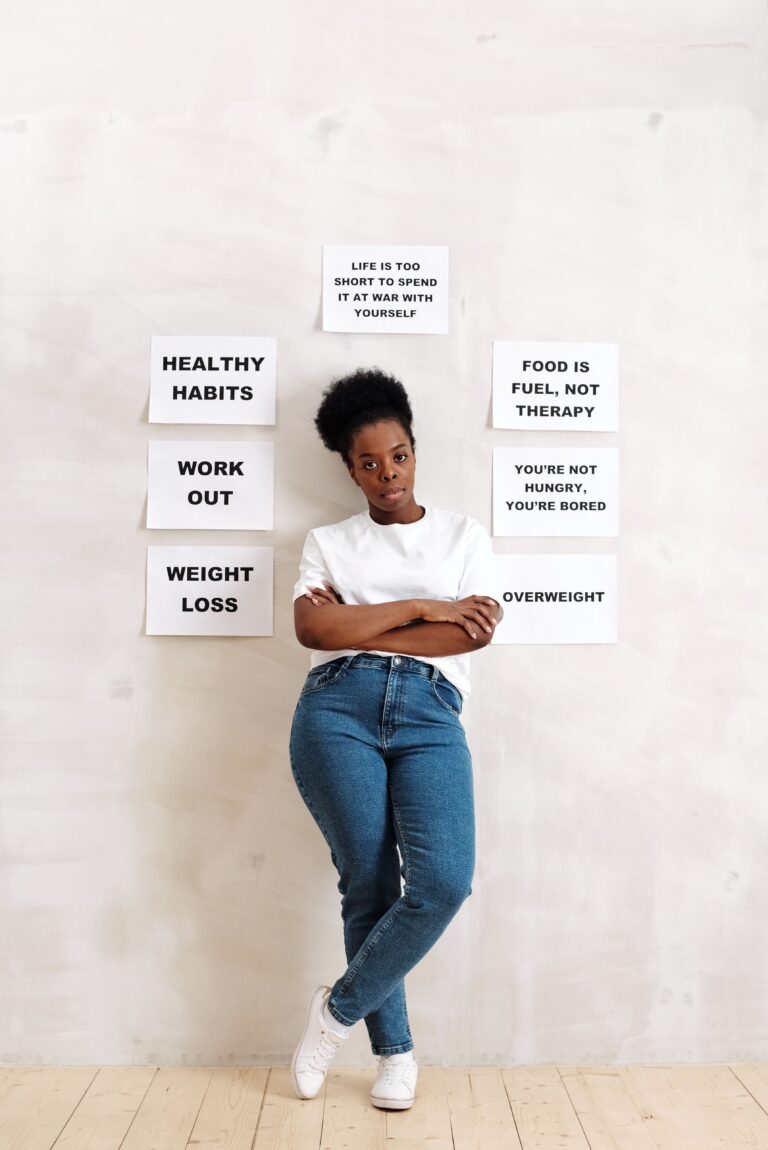
What if the secret to making AuDHD life easier isn’t trying harder, but getting a little weird? Sometimes the most useful autistic and ADHD life hacks sound completely ridiculous. Like filming yourself cleaning, letting a cartoon bird motivate you to brush your teeth, or standing on a wobble board in the bathroom. But when traditional productivity advice doesn’t work for your brain, unconventional solutions might be exactly what you need.
I’ve collected seven of the weirdest autistic and ADHD hacks for adults from my new book, Not Broken: Working With Your AuDHD Brain. Some are things I’ve personally tried, while others are ideas worth experimenting with. They’re all about making everyday life a little easier without forcing yourself to do everything the conventional way.
And yes, some of them are pretty bizarre. But who decided that life hacks have to be normal?
Which weird AuDHD hack should you try first?
Start with the problem that sounds most familiar:
→ Pretend you’re starring in your own reality show.
→ Forget the rules and eat breakfast for dinner.
→ Let a cartoon bird motivate you.
→ Race a short shower playlist.
→ Stack it onto something you already do.
→ Try chewing gum during a boring task.
→ Turn your fridge door into an external memory.
You don’t have to try all seven. Pick the problem that’s annoying you most and start there.
1. Pretend you’re on a reality show while cleaning
You might have noticed how watching other people clean their absolutely disastrous apartment on YouTube can be very satisfying. So what if you became the star of your own cleaning show?
Set up your phone, hit record, and start cleaning. Pretend you are on a reality show and people are watching you. You could even narrate your efforts like a reality TV contestant.
“Day three. The kitchen is still a disaster. Morale is low. We’ve discovered what might have been a cucumber behind the toaster.”
If you’re feeling adventurous, record a time-lapse. Watching a messy room transform into a clean one in 30 seconds can be surprisingly satisfying.
The trick is that being filmed can create a sense of accountability. It isn’t exactly body doubling, but for me the imaginary audience can serve a similar purpose: suddenly you are not just cleaning alone in a vacuum.
And if you live in the US, you can even earn real money for filming yourself cleaning! It sounds too good to be true, but it is a thing. And I deeply regret that it isn’t available in my country yet, as it would be a real motivation booster. Suddenly, I wouldn’t be just cleaning my home alone, I would be making money!
To begin, you simply join an app like this one, or this one (use my code 22R25NPC for the second one), and they pay you for the videos that are then used to train AI.
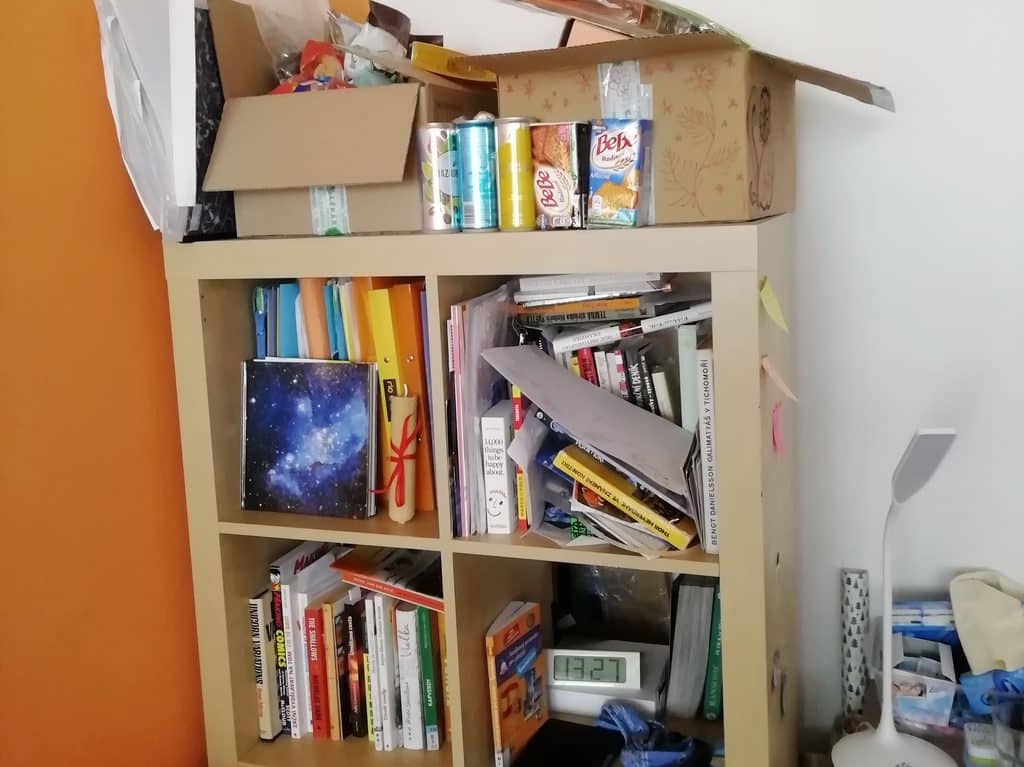
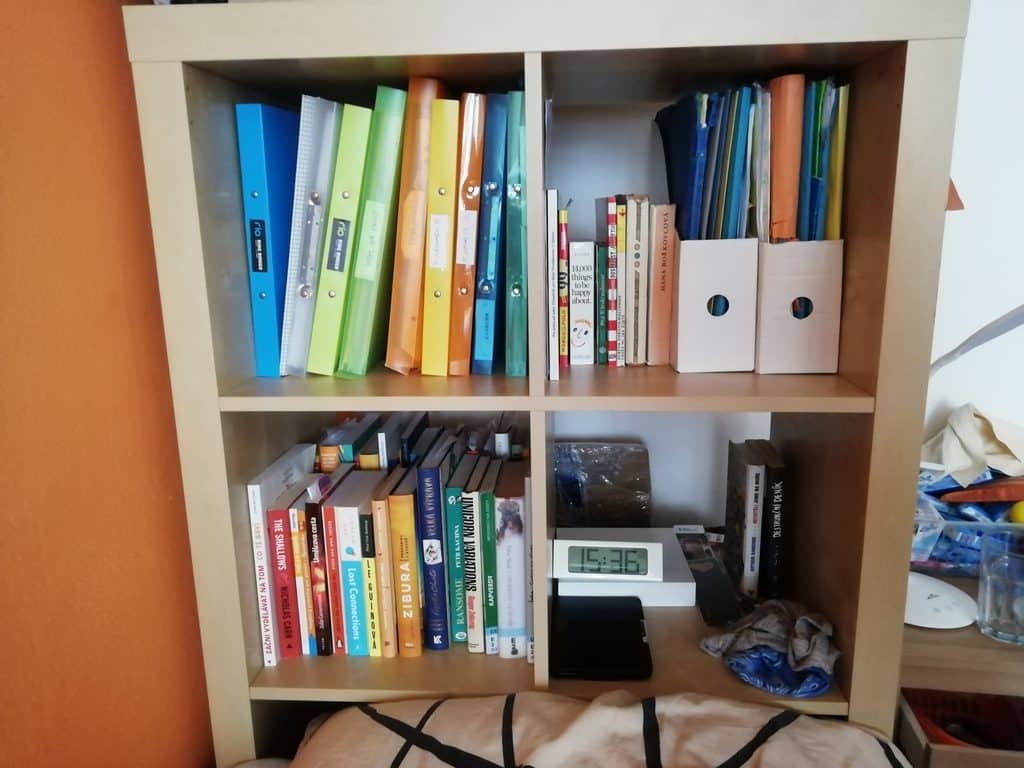
I haven’t got around to actually filming myself cleaning yet, mostly because I usually don’t have any suitable place to prop up my phone. But I often snap before-and-after pictures and send them to my friends. Seeing the progress I made laid out before me is really encouraging. (Although often I impulsively jump into cleaning and forget to take the before picture. ADHD happens.)
You don’t have to publish the video anywhere afterward. The goal isn’t to become an influencer. It’s to make an otherwise painfully boring task a little more interesting.
2. Let a cartoon bird run your life
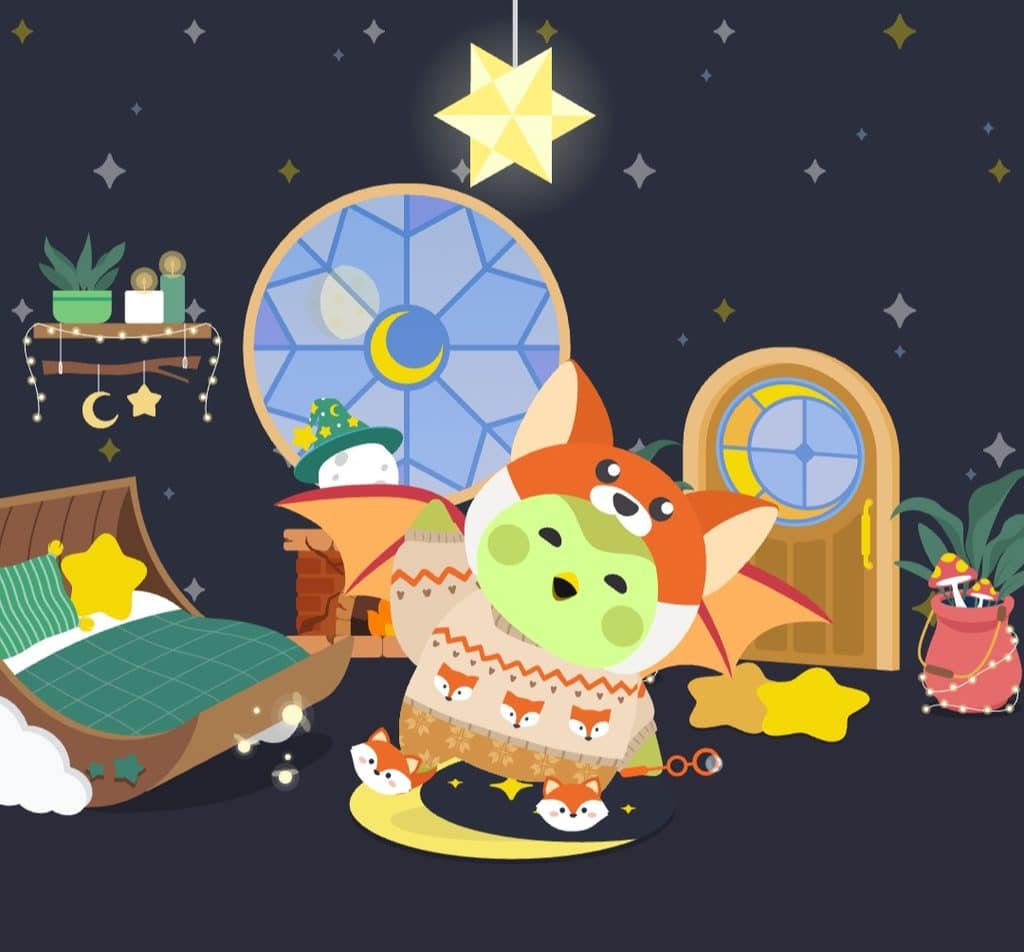
Imagine being a grown adult who needs a tiny cartoon bird to convince them to drink water. Welcome to the wonderful world of Finch, a self-care app where you look after a virtual pet by completing real-life tasks.
You can set goals like brushing your teeth, taking a shower, drinking water, or getting out of bed. As you complete them, your little bird earns rewards and goes on adventures.
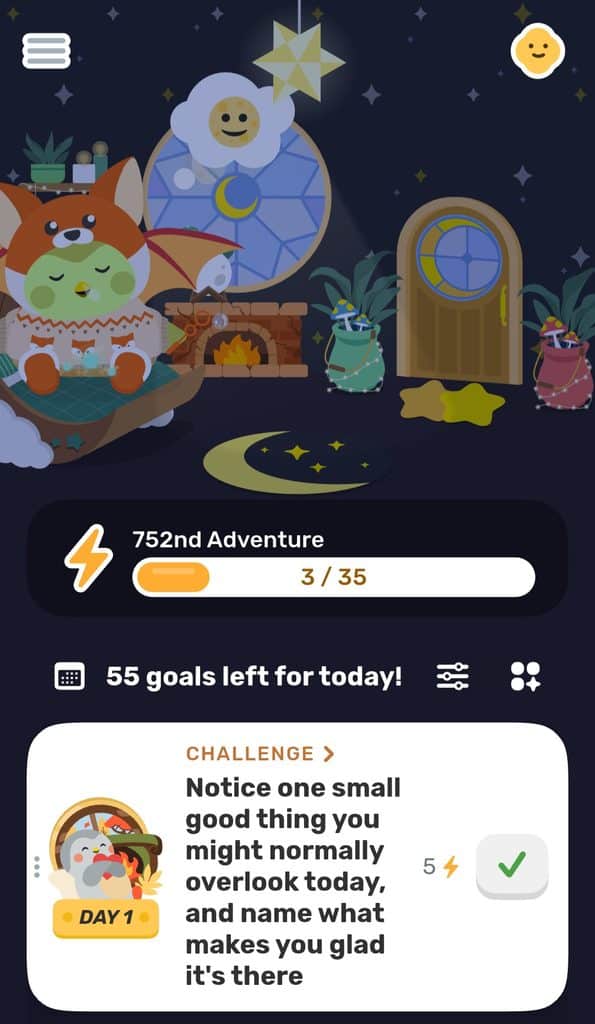
It’s basically a Tamagotchi, except instead of keeping a virtual pet alive, you’re using it to take care of yourself. (And unlike Tamagotchi, your birb never dies if you don’t use Finch for a while. Nor does he emotionally abuse you like a certain other bird from a famous language learning app. He just patiently waits for you to open the app next time, ready to greet you cheerfully.)
And here’s what makes it interesting for an ADHD brain. Many everyday tasks offer very little immediate reward. You brush your teeth today, and the benefits might not be noticeable for years. That’s not exactly exciting. But what if brushing your teeth also helped your adorable little bird buy a new hat? Suddenly, the task feels a little more rewarding.
For example, I have my whole morning routine laid out in Finch, from meds and stretching to changing my rat’s water and feeding them, to showering. And I have tasks like washing my hair, cleaning my rat’s cage, or watering the plants, set to repeat after a certain number of days.
Recently, I added giving Lily her meds, which I do once every three days, and it’s really difficult to remember. So I set a notification to go off every morning when it’s the med day. (I have also added it to my Google Calendar, just to be extra sure.)
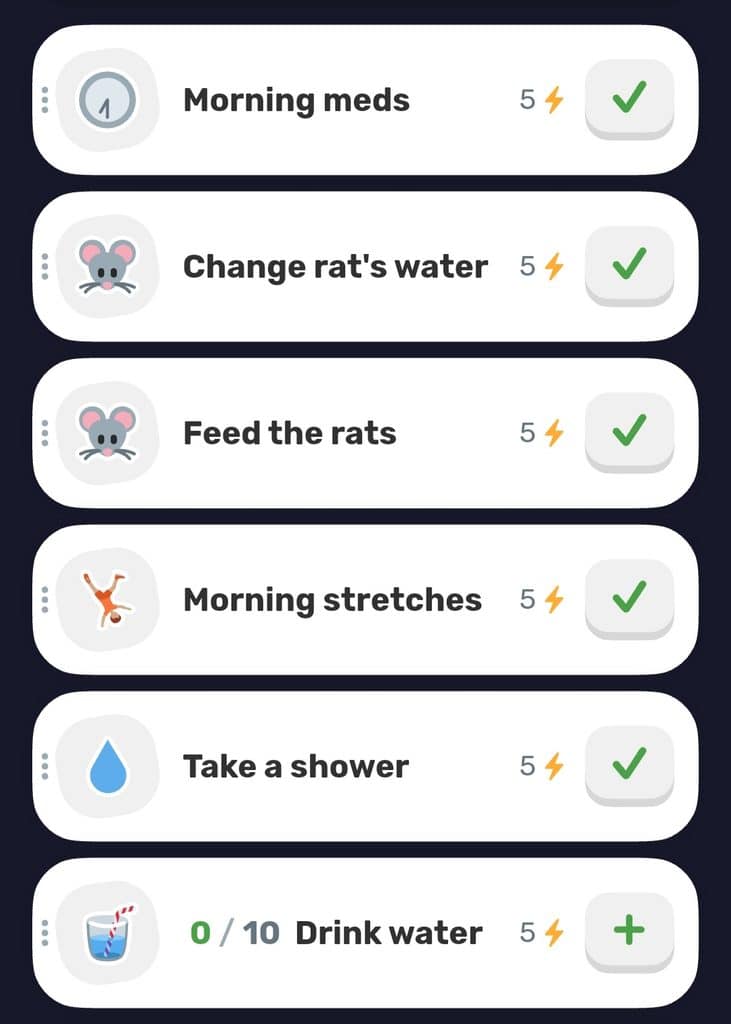
This is called gamification: turning ordinary activities into something resembling a game. It won’t work for everyone, but if external rewards motivate you, a virtual pet might be worth trying.
Apparently, adulthood sometimes means outsourcing your executive functioning to a cartoon bird. And I’m perfectly fine with that.
3. Brush your teeth while standing on a wobble board
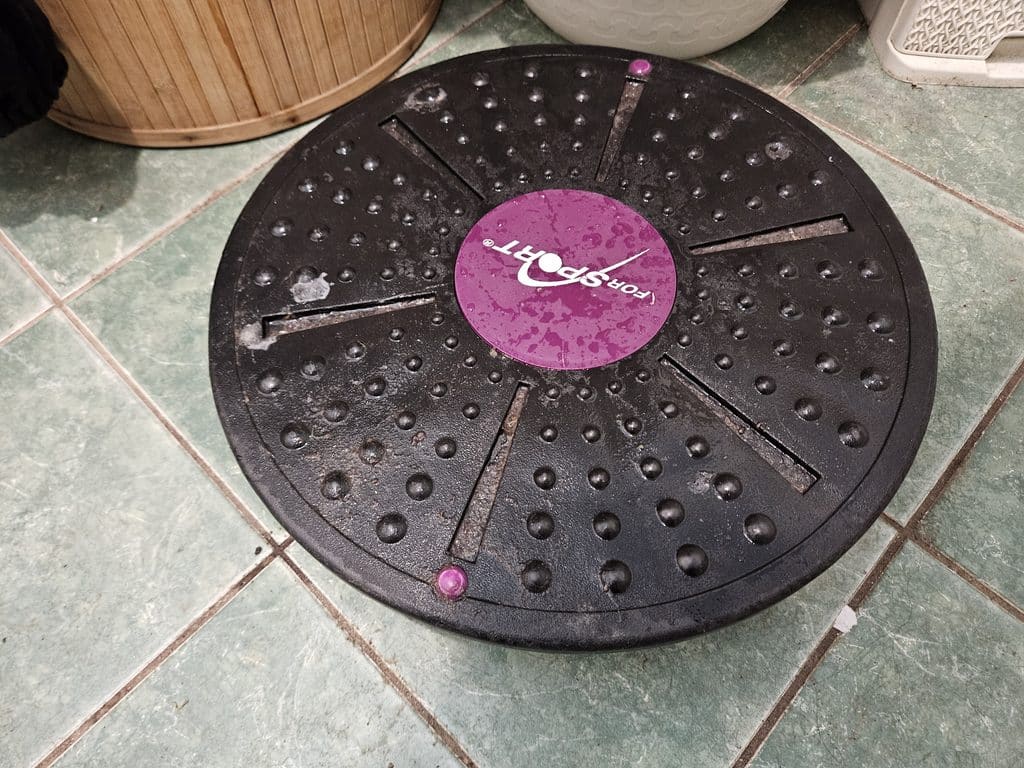
This one sounds ridiculous, but it’s something I actually do. I keep a balance board near my bathroom sink and stand on it while brushing my teeth.
Why?
Because I’m combining two activities that would otherwise require separate time and effort. I want to practice my balance because there is a theory that it might help with ADHD symptoms, but remembering to do balance exercises is another task I’d have to add to my morning routine. And my morning routine has enough trouble surviving as it is.
So I attach the exercise to something I already do. This is called habit stacking, and it’s a useful strategy for people with ADHD who struggle to establish routines. Rather than trying to remember a completely new activity, you connect it to an existing habit. The result? I get to practice my balance without having to find extra time for it.
You could use the same principle to stretch while waiting for your coffee, practice standing on one leg while doing a safe stationary activity, or listen to an audiobook while folding laundry.
Just be careful with the wobble board. Make sure you’re stable and have something sturdy to hold on to. It’s not worth falling face-first into your bathroom sink for the sake of productivity.
Like these slightly weird solutions?
Not Broken is full of practical AuDHD-friendly strategies for self-care, cleaning, motivation, time, routines, relationships, and everyday life.
Explore Not Broken →4. Chew gum to wake up your brain
Sometimes your brain simply refuses to cooperate. You have things to do, but your attention has apparently gone on vacation without notifying you. Could something as simple as chewing gum help?
Surprisingly, some research suggests that chewing gum may temporarily improve alertness or certain aspects of attention. The findings are mixed, and it certainly isn’t a treatment for ADHD, but it’s an interesting little experiment.
Chewing provides repetitive movement and sensory stimulation, which some people find helpful when they’re trying to focus. And unlike a complicated productivity system, chewing gum requires approximately zero organizational skills.
It might be worth trying when you’re reading, working, or struggling to stay alert during a boring task. Of course, if chewing gum bothers your jaw, creates unpleasant sensory experiences, or makes concentrating harder, skip it.
The point isn’t that chewing gum will magically fix your attention. It’s that sometimes small sensory adjustments can make a difference. And if a piece of gum helps you get through a boring spreadsheet, why not?
5. Race your shower playlist
Showering can be difficult when you’re AuDHD. There’s the challenge of getting started, the sensory experience of water, and the endless sequence of little steps. And if you struggle with time blindness, you might spend far longer in the bathroom than you intended.
One solution is to create a short shower playlist and challenge yourself to finish before the last song ends. Instead of constantly checking a clock, you have an auditory reference for how much time has passed.
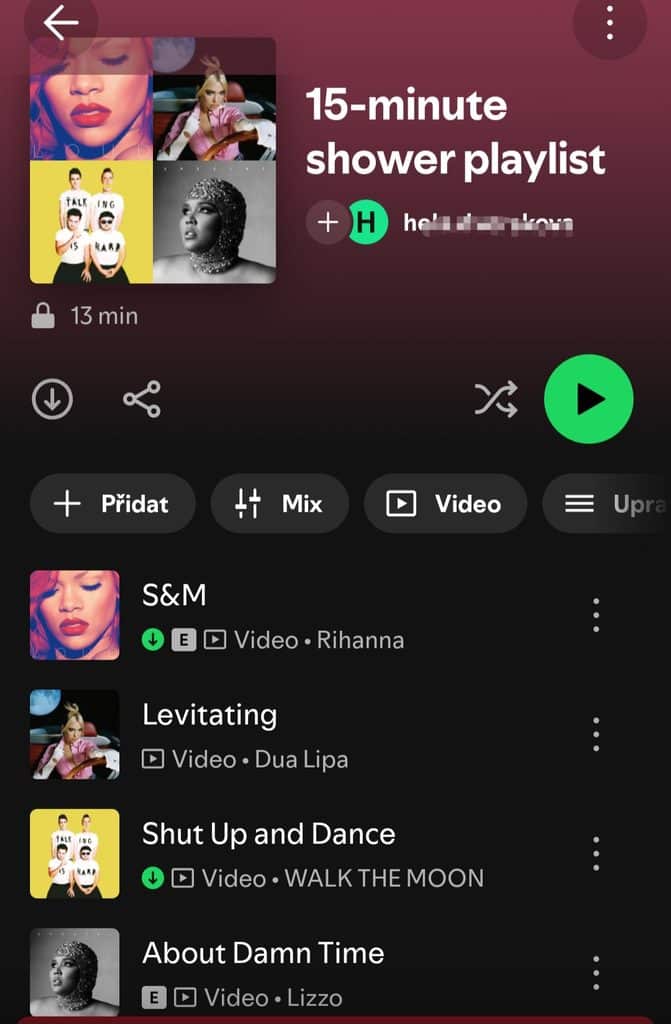
You can even assign different songs to different stages of your routine. The first song means it’s time to wash your hair. The second means it’s time to wash your body. The third means you’re almost done.
Music can also make a boring task more enjoyable, which may help you get started in the first place.
Of course, the playlist should be a gentle guide, not a source of pressure. If you’re having a difficult sensory day, you don’t need to race anything. And if music itself is overstimulating, this particular hack probably isn’t for you.
But if you enjoy turning everyday tasks into little challenges, why not make your shower a race against your favorite songs?.
6. Turn your fridge door into an external memory
Have you ever opened your fridge, discovered a container of something that used to be edible, and wondered how long it’s been developing its own civilization?
You’re not alone.
One of the challenges of ADHD is that things can effectively disappear from your awareness when they’re out of sight.
You buy fresh vegetables, put them in the fridge, and promptly forget they exist. Then, two weeks later, you discover an unexpected biology experiment.
One way to prevent this is to use your fridge door as an external memory system.
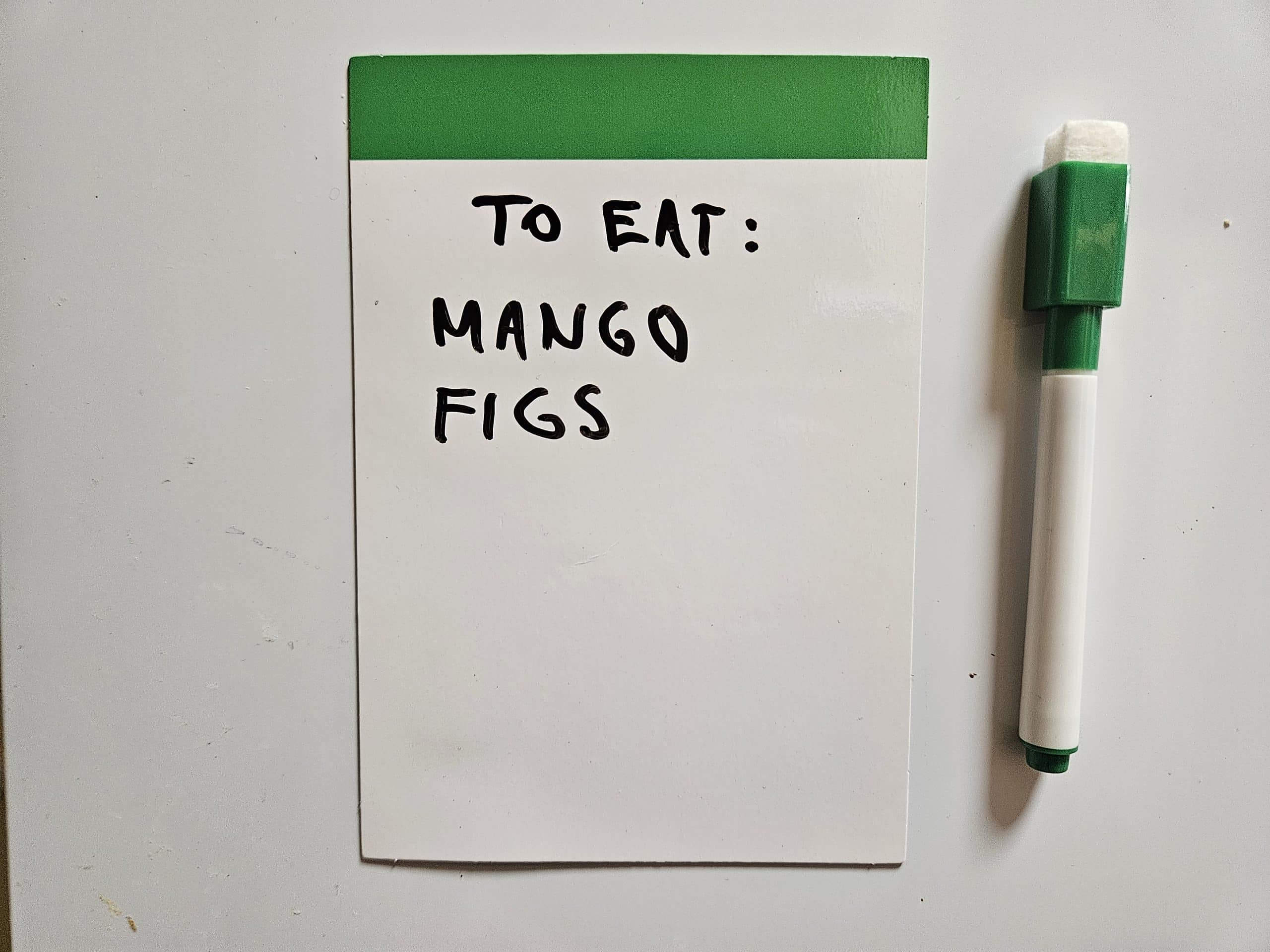
Attach a small whiteboard, magnetic notepad, or list of perishable foods to the outside of your fridge. Whenever you buy something that needs to be eaten soon, write it down. You can even create a little “Eat Me First” section to remind yourself which foods are approaching their expiration dates.
This life hack is an example of externalizing your working memory. Rather than relying on your brain to remember everything, you put the information somewhere you’ll encounter it naturally.
Because sometimes the best memory strategy is admitting that your brain has absolutely no intention of remembering that bag of spinach.
7. Eat breakfast for dinner
Who says breakfast foods are only allowed before noon?
When you’re AuDHD, preparing a proper dinner can feel like a monumental task. You have to decide what to cook, check which ingredients you have, chop things, cook things, and then clean everything up.
And you’re supposed to do all that every single day?
Here’s a revolutionary idea: You can eat breakfast for dinner.
Scrambled eggs, toast, cereal, oatmeal, yogurt, or whatever breakfast food you find easy to prepare. There’s no law saying you must eat a complicated meal just because it’s 7 p.m.
Breakfast foods are often familiar, predictable, and require minimal preparation. That makes them especially useful when you’re dealing with executive dysfunction, decision fatigue, or sensory overwhelm.
Of course, you still need a reasonably balanced diet. But there’s nothing inherently wrong with having scrambled eggs and toast for dinner.
Sometimes the best AuDHD life hack is simply giving yourself permission to break a completely arbitrary rule.
Why unconventional ADHD hacks for adults can actually work
Most productivity advice assumes that if you know what you’re supposed to do, you can simply decide to do it. But that’s not always how an AuDHD brain works.
You might know perfectly well that you need to clean your kitchen, drink water, or brush your teeth. The problem isn’t knowing. It’s getting started, remembering, managing transitions, dealing with sensory discomfort, or finding enough motivation to follow through.
That’s why unconventional life hacks can be so useful.
They change the task itself or the environment around it. Instead of demanding more willpower, they give your brain something it can actually work with.
A cleaning video creates a sense of accountability. A cartoon bird adds an immediate reward. A shower playlist makes time easier to track. A fridge list takes the pressure off your working memory.
Not every trick will work for every person. You might love the Finch app and absolutely hate being filmed while cleaning. That’s fine. The idea is to experiment until you discover what works for your particular brain.
And sometimes the weirdest solutions turn out to be the most practical.
If you’re looking for more everyday strategies, I’ve also shared nine ADHD life hacks I actually use, from managing time blindness to making getting dressed easier.
Want more AuDHD lifehacks?
Make everyday AuDHD life a little easier
Not Broken: Working With Your AuDHD Brain is packed with practical, sometimes slightly weird strategies for self-care, cleaning, motivation, time blindness, routines, relationships, and all the other supposedly “simple” parts of everyday life.
The goal isn’t to force yourself to function like everyone else. It’s to experiment, find what works for your brain, and make things easier your own way.
Get Not Broken →
Practical strategies for working with your brain instead of constantly fighting it.



Helen Olivier is a neurodivergent writer, AuDHD explorer, and professional overthinker with 40+ years of lived experience in the wonderfully weird world of ADHD + autism. She writes for people who’ve been told they’re “too much” or “not enough,” offering comfort, clarity, and the occasional executive dysfunction survival hack. Her blog is her way of turning daily chaos into useful insights for other neurodivergent folks.