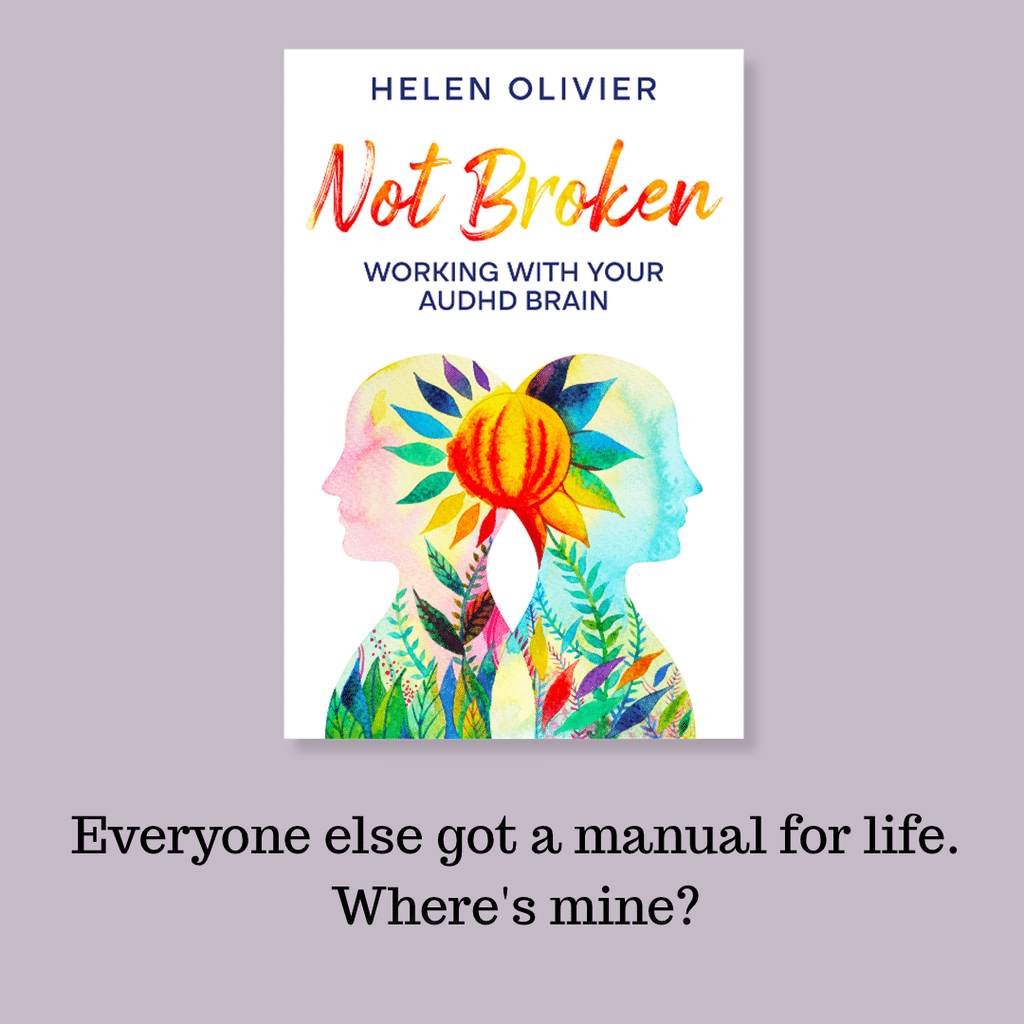
Before I knew I was AuDHD, I just thought I was failing at life. Bad student. Bad worker. Bad friend. Too disorganized. Too sensitive. Too slow to start but too fast to speak. And also, too tired. I wondered if everyone else got a manual for life that I somehow missed.
I couldn’t understand how other people were doing it. They had the same 24 hours in a day as me, but they all seemed to be doing so much more with them.
When I realized I was different, I also slowly realized that I would have to find different ways to function. So I started researching. And experimenting. And adjusting my experiments and trying again. And the more I learned, the more something in me relaxed.
Because it turns out: I’m not broken. I just have a different operating system.
Living with an AuDHD Brain
If you’ve been told you’re “too much” and “not enough” in the same breath, welcome.
If you need seven reminders for one task but can also hyperfocus for hours, you’re not alone.
You need routines, but also can’t follow routines. You crave both predictability and novelty. You want to go out and stay at home and read a book. You are a walking contradiction.
You may crave stimulation and then get overwhelmed by it. You may desperately want plans and then resent the plans once they arrive. You may struggle to start a task for hours and then be unable to stop once you finally get going.
A lot of conventional advice can fall flat when you’re AuDHD. A lot of conventional advice simply wasn’t designed for the way an AuDHD brain works.
But here’s the truth: our brains are incredibly capable, just in different ways. And when we learn how they work, we can stop fighting them and start working with them.
That doesn’t mean AuDHD isn’t genuinely disabling sometimes. Some things are harder for me because of how my brain works. The difference is that I no longer see those struggles as proof that I’m lazy, incapable, or failing at life.
From trying to fix myself to learning what actually helps
For years, I thought I was broken. No matter what I did, I was falling behind my peers. I seemed to accomplish less in the same amount of time, I was always late, I was disorganized, and my home was a mess.
And then I got an AuDHD diagnosis.
Slowly, my outlook started changing as I learned what it meant to live with an AuDHD brain. I could finally see I was not a broken neurotypical, but a perfectly good neurodivergent person.
And I could finally start researching ways to work with my brain instead of against it.
I read books, searched online, asked ChatGPT, experimented, adjusted, and tried again. I started to treat my everyday struggles as little puzzles to solve, rather than personal failures to overcome.
If I couldn’t reliably remember tasks, what would happen if I made them more visible? If starting a task was the hardest part, could I make the first step ridiculously small? If traditional routines kept falling apart, could I build more flexible ones?
I experimented with reminders, visual cues, different ways of organizing my home, and strategies for managing time.
Some worked surprisingly well. Others sounded brilliant in theory but turned out to be completely impractical in real life. And some worked beautifully for three days before my ADHD brain decided they were officially boring.
But gradually, I started discovering approaches that made everyday life a little easier.
What working with my brain actually looks like
Working with my brain doesn’t mean I’ve suddenly figured everything out. Most of the time, it means making small changes that remove friction.
If I need to remember something, I don’t rely on memory. I make it visible. I might write it on a big sheet of paper and put it on my desk, or immediately add a reminder to Google Calendar.
If a task feels impossible to start, I make the first step almost ridiculously small. I don’t tell myself to clean the kitchen, I start by putting 5 things away. Sometimes I set a timer for just five or fifteen minutes and give myself permission to stop when it rings. Often, once I’ve started, I find that I actually want to keep going.
If I keep losing track of time, I set alarms to orient myself in the flow of the day, use visual timers, and external reminders instead of trusting my internal sense of time. And if I constantly ignore reminders, I change the type of cue instead of simply adding more reminders.
If I keep leaving things out because “out of sight” means they disappear from my mind, I use visible storage, transparent bins, and open shelves instead of trying to hide everything away.
If showering feels impossible, I ask which part is actually putting me off: the transition, the cold, wet hair, the noise, the effort afterwards?
If a meal requires too many decisions, I make the decision once and repeat it for a while. I might eat the same breakfast and dinner for weeks and get the novelty my ADHD brain wants from having a different lunch
None of these strategies fixes my AuDHD. They simply remove a little friction from everyday life. And sometimes, a little less friction makes a surprisingly big difference.
Over time, these little experiments became blog posts. And without realizing it, I was slowly building the book I wish I’d had when I first discovered I was AuDHD.
Why I made this book
I didn’t know that I was writing a book when I started collecting these AuDHD tips and lifehacks a few years ago. I simply wanted to share them on my blog so that people who might find them helpful could read them. But over time, I realized that the useful pieces were scattered across years of blog posts. If someone wanted help with time blindness, cleaning, food, motivation, sensory overwhelm, and everyday AuDHD life, they had to dig through my archives to find it all.
So I decided to bring the most useful pieces together in one place. The result is Not Broken: Working With Your AuDHD Brain. Think of it as a practical, validating guide for people who want to understand their brains better, not to fix themselves, but to support themselves.
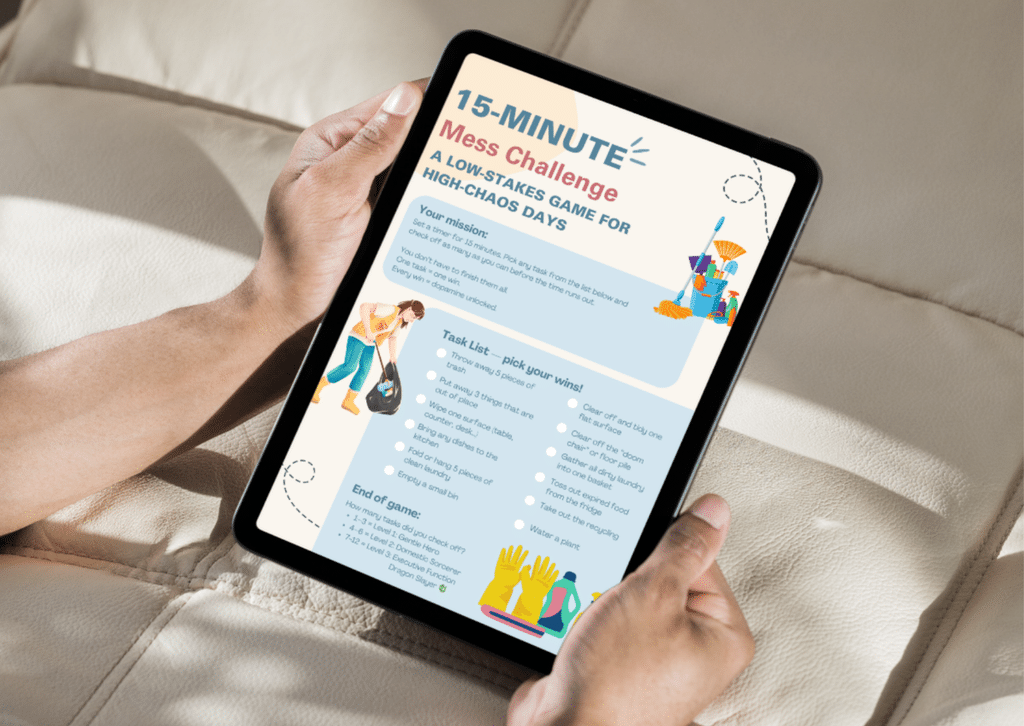
I also added eight optional resources and exercises to help you put some of the ideas into practice.
What’s Inside?
Not Broken is a curated collection of my most helpful blog posts, personal insights, and practical strategies for navigating everyday life with an AuDHD brain.
It will not magically make you into someone who wakes up at 5 AM, exercises, meditates and effortlessly completes everything on their to-do list.
Frankly, I wouldn’t know how to write that book.
Instead, it’s about understanding why certain things are difficult and finding realistic ways to make them a little easier.
Here are just some of the things we’ll explore:
- Time blindness – Why time keeps disappearing and what can make it easier to manage.
- Executive dysfunction – How to make tasks easier to start.
- Cleaning and organization – Building a home that works better with your brain.
- Sensory sensitivities – Making everyday environments a little less overwhelming.
- Motivation and procrastination – Getting moving when willpower simply isn’t showing up.
- Sleep and energy – Working with your energy instead of constantly fighting it.
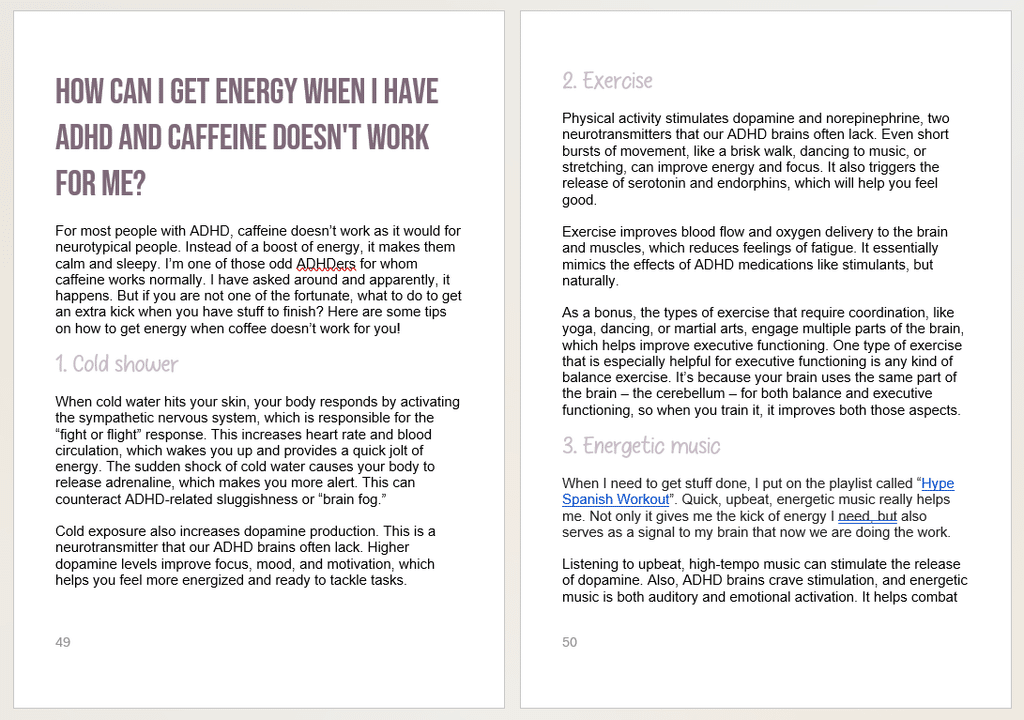
It’s written in a neurodivergent-friendly way. Short sections, clear language. You can read it in order or just open it randomly and start anywhere.
You’re Not Broken
You’re not broken. You’ve just been trying to follow an instruction manual that wasn’t written for your brain.
Learning how your own brain works won’t make every struggle disappear. But it can help you stop wasting so much energy fighting yourself and start finding ways to make everyday life fit you a little better.
If you’d like more practical ideas for working with your AuDHD brain instead of constantly fighting it, Not Broken is now available in my shop.
And if you read it, I’d love to hear which ideas resonate with you most.



Helen Olivier is a neurodivergent writer, AuDHD explorer, and professional overthinker with 40+ years of lived experience in the wonderfully weird world of ADHD + autism. She writes for people who’ve been told they’re “too much” or “not enough,” offering comfort, clarity, and the occasional executive dysfunction survival hack. Her blog is her way of turning daily chaos into useful insights for other neurodivergent folks.